Georgia has a habit of turning first-time visitors into advocates. The country sits at the crossroads of Europe and Asia, holds a culture and language entirely its own, and delivers experiences that range from one of the world's most atmospheric ancient cities to ski resorts above the Caucasus range to a Black Sea coast that most travelers have never considered. It is affordable, accessible, and consistently better than people expect.
This guide covers Georgia the way a specialist covers it — not just Tbilisi, but the full country. Kazbegi in the north. Borjomi in the spa-town interior. Kutaisi in the west. Batumi on the Black Sea. Gudauri above the treeline. Each region has its own character and its own best season. Getting the routing right means experiencing all of it without backtracking.
Who Georgia Is Right For
Georgia works across a wider range of traveler types than its size would suggest. Culture and history travelers have the old city of Tbilisi, the ancient Mtskheta, and the UNESCO monasteries of western Georgia. Adventure travelers have the Greater Caucasus mountains, Gudauri's ski slopes, and the hiking trails above Kazbegi. Wine enthusiasts have one of the world's oldest winemaking traditions. Georgia has been producing wine for at least 8,000 years, and the amber-coloured natural wines made in traditional clay qvevri vessels are unlike anything produced elsewhere. Food travelers have a cuisine that is entirely distinct, hearty, and seriously good.
Georgia is also one of the most accessible international destinations for travelers from GCC countries, with a strong visa situation for most nationalities including a relatively straightforward e-visa. It has become one of the fastest-growing destinations in the region for a very clear reason: it delivers significantly more than people expect for significantly less money than comparable European destinations.
Ask begovo if you are considering Georgia for the first time and want to understand how it fits your travel style.
Best Time to Visit Georgia
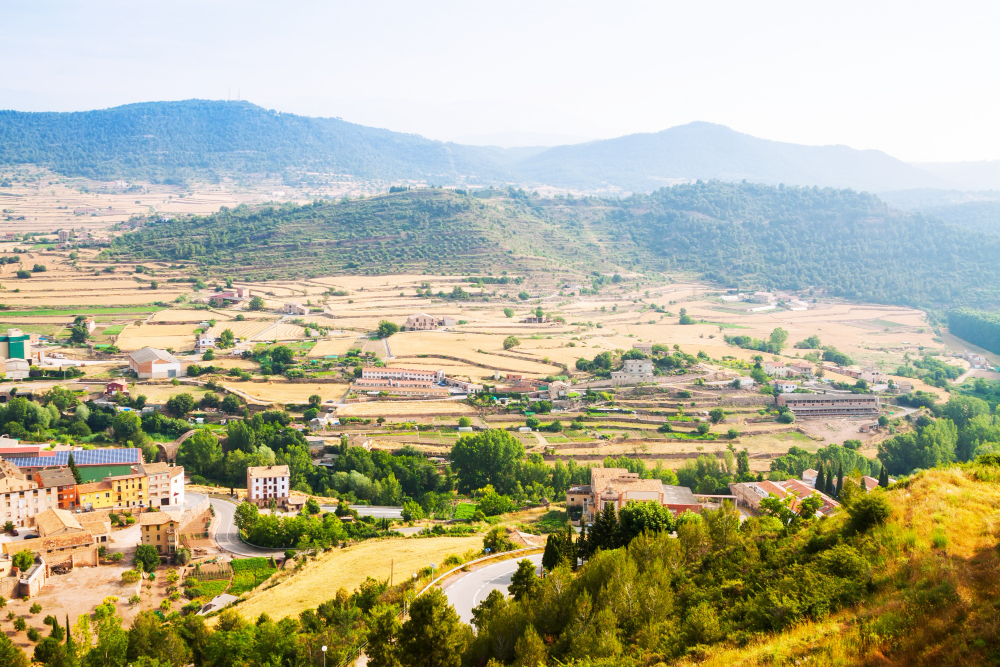
Georgia's seasons have meaningfully different characters across its regions, and the right window depends on what you want from the trip.
April to June is the specialist's first recommendation. Spring in Tbilisi brings the old city to its best. Outdoor tables return, the wisteria blooms on the Abanotubani balconies, and the temperature is perfect for walking. Kazbegi's mountain trails are opening, Borjomi's park is green and flower-filled, and Kutaisi's monasteries are surrounded by the lush western Georgia landscape. This is the optimal window for a full Georgia circuit.
September to November is the second window, and for wine travelers specifically, it may be the first choice. The Kakheti wine region east of Tbilisi holds its harvest season in late September and October, and the combination of the grape harvest, the autumn foliage across the Alazani Valley, and the amber light of Georgian autumn makes this the most photogenic season.
July to August is high summer. Tbilisi gets hot (35 degrees Celsius is common), and the old city can feel busy in peak season. Batumi, however, is in full summer mode. The Black Sea beach season is at its peak, the seafront is lively, and the city has a summer energy that is genuinely enjoyable. Kazbegi in summer is excellent for hiking: trails are fully open, wildflowers cover the mountain meadows, and the days are long. For travelers focused on the coast and the mountains, summer is a strong choice.
December to March is winter. Gudauri's ski season runs from December through March, with reliable snow above 2,200 metres and modern lift infrastructure. Tbilisi in winter is cold but atmospheric, with Christmas markets and a quietness that gives the old city a different, more intimate character. Kazbegi becomes difficult to access by road in heavy snow, and the Gergeti Trinity Church hike requires winter kit.
Ramadan and Georgian Orthodox Easter both affect the country's social atmosphere. Georgian Easter (which follows the Orthodox calendar and often differs from Western Easter dates) is one of the most significant cultural events of the year, with candlelit processions through Tbilisi's old city that are extraordinary to witness.
What to Expect Across Georgia's Key Regions
Tbilisi
Tbilisi is the anchor of any Georgia itinerary and one of the most walkable, layered, and genuinely surprising capital cities in the world. The old city — Kala and Abanotubani — is built across steep hillsides above the Mtkvari River, and its character comes from the architectural density: carved wooden balconies overhanging narrow streets, Persian-era mosques beside Orthodox churches beside synagogues, sulfur bathhouses steaming gently in the valley below the cliff. It is a city where five centuries of overlapping culture are visible simultaneously from any high point.
Narikala Fortress sits above the old city on a volcanic ridge and is the correct place to begin any Tbilisi orientation. The cable car from Rike Park delivers you to the top in four minutes. From the fortress walls you see the full extent of the old city, the river below, the new Tbilisi skyline to the west, and the Caucasus range in the distance on clear days.
Abanotubani — the sulfur bath district at the base of the cliff — is the defining Tbilisi experience. The domed bathhouses draw naturally heated sulfur water from underground springs that have been in use since at least the 5th century. The smell of hydrogen sulfide is immediate and distinctive. Private rooms are available in all the established bathhouses — book in advance for the better ones (Orbeliani Baths and the Royal Baths are the specialist choices) — and the experience of soaking in a private pool of naturally sulfurous hot water while someone scrubs you with a kesa mitt is exactly as restorative as it sounds.
Rustaveli Avenue and the Sololaki neighbourhood give the city its 19th-century European face: art nouveau buildings, the National Gallery, the National Opera, the Parliament building. Sololaki, the residential neighbourhood between Rustaveli and the old city, has some of the best small restaurants, wine bars, and coffee houses in Tbilisi — and the best natural wine in Georgia is available here at prices that feel extraordinary by any Western standard.
Specialists allocate three nights to Tbilisi. This allows a full old city day, a Mtskheta and Jvari day trip (30 minutes from the city, the ancient capital of Georgia and the site of the UNESCO Jvari Monastery above the river confluence), and a half day of galleries and markets before continuing north or west.
Kazbegi
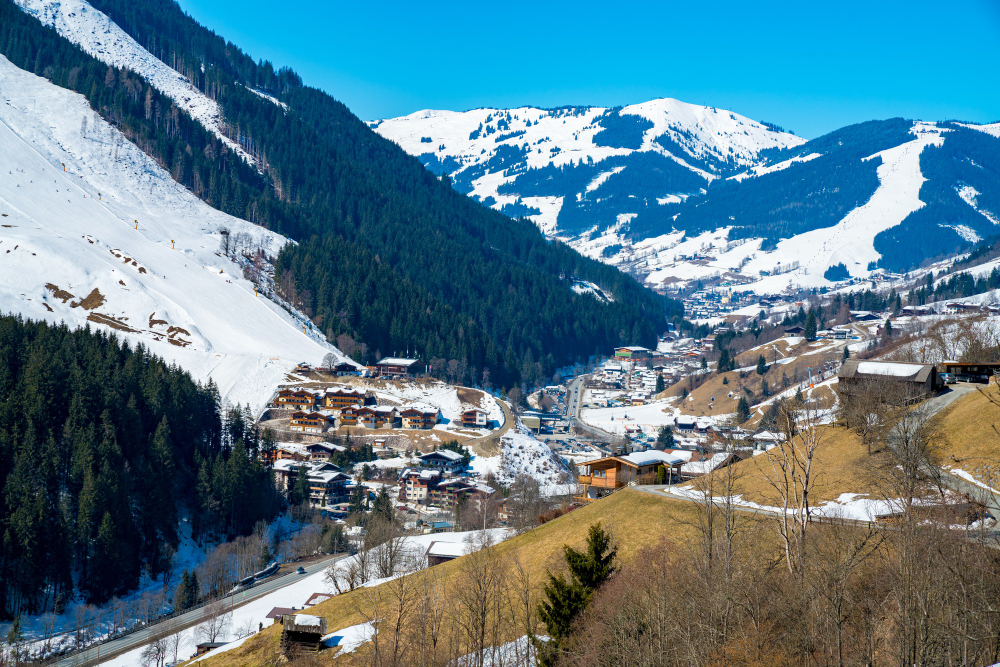
Kazbegi — more precisely the town of Stepantsminda, with Kazbegi as the district name — sits in the Greater Caucasus 150 kilometres north of Tbilisi along the Georgian Military Highway. The drive alone justifies the journey: the highway climbs through the Dariali Gorge, passes the Ananuri Fortress rising from a reservoir (stop here for at least 30 minutes), and crests at the Jvari Pass at 2,379 metres before descending into the Stepantsminda valley.
Gergeti Trinity Church sits on a triangular peak above the valley at 2,170 metres, with the snow-covered summit of Mount Kazbek (5,047 metres) rising directly behind it. The image of the medieval stone church against the Caucasus peak is among the most recognisable photographs in the Caucasus, and the reality of standing at the church, looking down at the valley and up at the glacier, is one of those travel moments that is difficult to adequately describe.
The hike to Gergeti takes approximately two hours from the village. A 4WD taxi can cover most of the elevation if the trail conditions are poor or if time is limited — but the walk, in good conditions, is the correct approach. Start before 8am to have the church largely to yourself.
Day trip versus overnight: Specialists consistently recommend overnight. The drive from Tbilisi takes three hours minimum. Arriving in the afternoon, walking to the church at dawn the following morning, and returning to Tbilisi or continuing west allows you to experience Kazbegi's extraordinary evening light and the silence of a mountain valley at night. A day trip is physically possible but experientially compromised.
Accommodation in Stepantsminda ranges from family guesthouses (excellent food, local hospitality, modest comfort) to the Rooms Hotel Kazbegi, a well-designed mountain hotel with views directly to the church and a restaurant that sources locally.
Borjomi
Borjomi is a spa town in the Lesser Caucasus, approximately 150 kilometres southwest of Tbilisi, and it functions in the specialist itinerary as the transition point between eastern and western Georgia. The town is built along the Mtkvari River valley and is known internationally for Borjomi mineral water, one of the most exported Georgian products, which rises from naturally carbonated springs in the town park.
The Borjomi Central Park is the attraction here. The springs flow from taps in a wooden pavilion at the park's centre, and the water (slightly salty, heavily carbonated, tasting of minerals and something ferrous) is free to drink as much as you want. The park extends into the forested hills behind the town, and the walking trails are excellent in spring and autumn.
Borjomi-Kharagauli National Park, one of the largest protected areas in the Caucasus, begins at the edge of town. The trail network covers subalpine meadows, forests of beech and hornbeam, and ridgelines with views across multiple mountain ranges. Day hikes from the park entrance are accessible without a guide. Multi-day routes into the park interior require preparation and are best arranged through a specialist.
The narrow-gauge train to Bakuriani, a Soviet-era mountain resort town 30 kilometres from Borjomi, is one of Georgia's quiet pleasures. The journey takes three hours for a distance of 30 kilometres, winding through forests and across viaducts, and the train itself is part of the experience. Bakuriani has a small ski area and a summer hiking base.
Specialists use Borjomi as a one-night transition between Tbilisi and Kutaisi. It adds genuine depth without adding significant time.
Kutaisi
Kutaisi is western Georgia's main city and is frequently underestimated by itineraries that push straight through to Batumi. It should not be underestimated. The city sits in a broad river valley and holds two of Georgia's most significant UNESCO World Heritage sites within easy reach.
Gelati Monastery, 11 kilometres east of the city, was founded in 1106 by King David the Builder and served as the intellectual and spiritual centre of medieval Georgia. The main cathedral holds some of the best-preserved Byzantine mosaics in the Caucasus, including a remarkable 12th-century mosaic of the Virgin and Child in the apse. The monastery complex occupies a forested hillside, and the combination of the architecture, the mosaics, and the physical setting (a south-facing slope above a valley, surrounded by ancient trees) is extraordinary.
Bagrati Cathedral sits on a hill within the city itself. It has been partially reconstructed following centuries of damage from Ottoman invasion, and its UNESCO listing has been the subject of ongoing discussion regarding the degree of restoration. The position above the city and the scale of the original structure are impressive regardless.
Prometheus Cave, 20 kilometres from Kutaisi, is a 1.4-kilometre section of a much larger cave system containing stalactites, stalagmites, limestone curtains, and underground lakes. Boat tours on the cave's underground river make it distinctly memorable. The lighting is dramatic rather than natural, but the geological formations are genuinely impressive. Allow two hours.
Sataplia Nature Reserve, 6 kilometres from Kutaisi, holds a set of 120-million-year-old dinosaur footprints preserved in limestone. The reserve also has a small colchic forest ecosystem and a glass-floored viewing platform over a canyon that children find thrilling and adults find vertiginous.
Specialists allocate one to two days to Kutaisi before continuing to Batumi.
Batumi
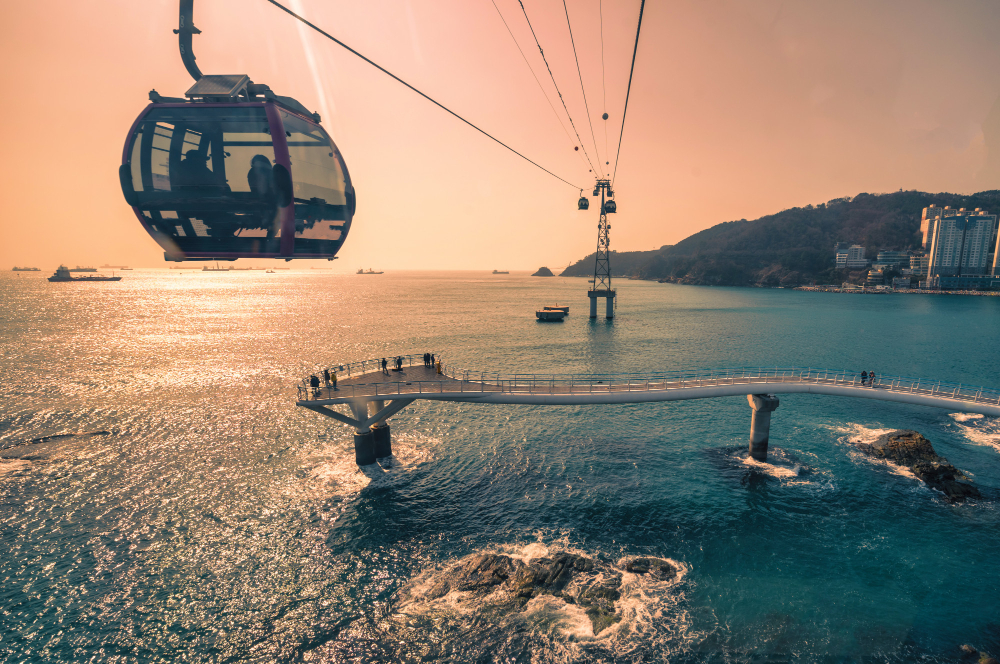
Batumi is Georgia's second city and its Black Sea coast capital, and it is unlike any other city in the country. Where Tbilisi is ancient and layered, Batumi is modern, ambitious, and intentionally dramatic. The Adjara government invested heavily in landmark architecture over the past decade, and the result is a Black Sea seafront that juxtaposes Soviet-era sanatoriums, Art Nouveau buildings from the Russian Empire period, and contemporary towers of glass and steel in a combination that is architecturally chaotic and visually irresistible.
The cable car from the seafront to the ridge above the city rises 260 metres and provides the best overview of Batumi's peculiar urban geography. Take it up at sunset and walk down through the old city.
The old city (Old Batumi) is concentrated around Piazza Square and the streets behind it. The 19th-century European architecture, built during the Russian Empire period when Batumi was the terminus of the Baku–Batumi oil pipeline and one of the most cosmopolitan ports on the Black Sea, has been restored to a standard that makes it one of the better urban renovation projects in the South Caucasus.
The Ali and Nino statue on the seafront is kinetic sculpture: two metal figures that move through each other as they revolve, representing the Georgian-Azerbaijani love story. It is tourist infrastructure by design but genuinely striking in motion.
The Botanical Garden, 9 kilometres north of Batumi, is one of the oldest in the Caucasus and holds over 2,000 species across a steep hillside above the sea. The combination of subtropical plants, sea views, and the relative quiet compared to the seafront makes it one of the better Batumi mornings.
Specialists use Batumi as the two-night western Georgia finale, with a Batumi airport departure back to Tbilisi or an international connection.
Gudauri
Gudauri is a ski resort in the Greater Caucasus at 2,100 metres, located on the Georgian Military Highway between Tbilisi and Kazbegi. In winter (December to March), it is Georgia's premier ski destination, with 57 kilometres of piste across several interconnected areas and modern cable infrastructure. Snow reliability above 2,200 metres is excellent and the resort is significantly less crowded and less expensive than comparable Alpine destinations.
In summer (June to September), Gudauri transitions to a hiking and paragliding base. The high-altitude meadows above the resort are extraordinary in July when the wildflowers are at peak. The paragliding tandem flights from the Gudauri plateau, with the Caucasus range below and Kazbegi visible in the distance, are among the best in the region.
Specialists include Gudauri as a one-night stop within the Kazbegi journey for winter travelers, or as a standalone extension for ski-focused groups.
Specialist-Recommended Pacing
8 days: The full Georgia circuit
Days 1 to 3: Tbilisi (old city, Abanotubani, Mtskheta day trip)
Day 4: Drive north to Kazbegi (Ananuri Fortress stop), overnight Stepantsminda
Day 5: Gergeti Trinity Church at dawn, drive to Borjomi, overnight
Day 6: Borjomi park and Bakuriani train, drive to Kutaisi, overnight
Day 7: Gelati Monastery, Prometheus Cave, drive to Batumi
Day 8: Batumi old city, cable car, fly from Batumi
10 days: Full circuit with depth
Add one night in Tbilisi (Kakheti wine day trip east) and one additional night in Kutaisi for Sataplia.
5 days: Tbilisi and Kazbegi only
For travelers with limited time: Tbilisi (3 nights), Kazbegi overnight, return.
Key Experiences
- Sulfur bath in Abanotubani. Book a private room at the Orbeliani Baths. Soak in naturally heated sulfurous water in a tiled room that has been doing this since the 12th century. An entirely restorative and entirely Georgian experience.
- Gergeti Trinity Church at dawn. Leave Stepantsminda at 5:30am. Arrive at the church as the sun rises over the eastern ridge. Stand in the churchyard above the clouds with Kazbegi glacier at your back. This is the image that defines Georgia.
- Gelati Monastery. One of the most beautiful and least-visited UNESCO heritage sites in the Caucasus. The 12th-century mosaics in the main cathedral are in extraordinary condition. Go in the morning when the light enters through the east window.
- Natural wine in Tbilisi. Georgia invented wine. The amber natural wines made in clay qvevri, skin-contact, unfiltered, profoundly different from anything produced in Europe or the New World, are available in small wine bars in the Sololaki neighbourhood for prices that feel implausible. This is not incidental to a Georgia trip. For some travelers, it is the trip.
- Georgian Military Highway. The drive from Tbilisi to Kazbegi through the Dariali Gorge, with the Ananuri Fortress above the reservoir and the Jvari Pass above the treeline, is one of the most scenic road journeys in the Caucasus. Do not treat it as transit. Stop at Ananuri. Pull over at the pass.
Practical Considerations
Visa: Georgia offers a visa-free policy for citizens of approximately 100 countries, including the US, UK, EU member states, Australia, and most GCC countries. An e-visa is available for nationalities that require one. Check the current list at the official Georgian government portal (evisa.gov.ge) before planning.
Budget: Georgia is one of the most affordable quality travel destinations in the world. A quality boutique hotel in Tbilisi ranges from $60 to $150 per night. Meals at serious local restaurants cost $10 to $25 per person including wine. Kazbegi guesthouses range from $40 to $120 per night. The Rooms Hotel Kazbegi is the premium option at approximately $200 per night.
Transport: A private driver is the recommended approach for the full circuit. The Georgian Military Highway and the roads to Borjomi and Batumi are well-maintained but require confidence and local knowledge in winter conditions. Minibuses (marshrutkas) connect all major cities and are used extensively by independent travelers, but timing and luggage constraints make them less practical for a full specialist itinerary.
Language: Georgian uses its own unique script. English is widely spoken in Tbilisi's tourism industry and in the main tourist sites across the country. Outside tourist contexts, Russian is the more widely understood second language.
How Begovo Specialists Build Georgia Itineraries
Georgia rewards the traveler who routes it well, and routing it well requires knowledge of how the regions connect, which seasons affect which cities, and where the specialist value in the ground operator network actually lies.
Begovo specialists know Georgia's best guesthouses in Stepantsminda, the Tbilisi wine bars worth sitting in for an evening, the private guides at Gelati who can read the Byzantine mosaics properly, and the camp in Borjomi National Park that is worth the one-night detour. They also know how to combine Georgia with Azerbaijan as a Caucasus two-country circuit, one of the most compelling value itineraries available to travelers from the US, UK, and GCC.
Browse Travel Anytime to see how Georgia fits within Begovo's supported travel framework.
Frequently Asked Questions
Do I need a visa to travel to Georgia as a US or UK citizen?
No. Georgia allows visa-free entry for US, UK, EU, Australian, and most GCC citizens for up to one year. Always check the official Georgian government portal for the most current list, but for most Western nationalities, Georgia is one of the most accessible Caucasus destinations.
Is it safe to drive the Georgian Military Highway?
Yes, in good weather. The road is paved and well-maintained. In winter, sections above 2,000 metres can be icy and require a 4WD vehicle with winter tyres. Most travelers hire a private driver with local knowledge, which is the specialist's recommendation for winter months.
Can I visit Georgia and Azerbaijan on the same trip?
Yes. The two countries share a land border and are often combined into a two-week Caucasus circuit. Azerbaijan requires an e-visa for most nationalities. A specialist can help with the routing and visa timing.
Ready to plan your Georgia trip?
Go with Confidence. Every itinerary is specialist-verified before you travel.

Comments
No comments yet. Be the first to comment.
Leave a comment