Kenya is one of those destinations that looks straightforward on paper and reveals its full complexity only once you are inside it. The safari brochures show the Maasai Mara. They rarely show how to get there without wasting two days, when exactly to go to witness the Great Migration, how to pair the Mara with Amboseli's extraordinary Kilimanjaro backdrop, or how the Rift Valley lakes, Naivasha and Nakuru, slot into the circuit without adding unnecessary nights on the road.
This guide covers Kenya the way a specialist covers it. Every region. Every city. The timing, the routing, the decisions that actually matter.
Who Kenya Is Right For
Kenya works for a wider range of travelers than most people expect. The obvious draw is the wildlife safari, and that pull is entirely justified. The Maasai Mara is one of the most extraordinary wildlife environments on earth, and the Great Migration remains one of travel's defining experiences. But Kenya also works for the traveler who wants culture alongside wildlife, the traveler who wants to move slowly through landscapes rather than chase animals on a packed schedule, and the traveler who wants a destination that rewards genuine curiosity.
Nairobi is a real city with a serious food scene, a growing arts culture, and a national park where lions walk through grass with the city skyline behind them. Amboseli is intimate and photographic in a way the Mara is not. The Rift Valley lakes are quiet and undervisited, and they offer experiences, cycling through Hell's Gate, taking a hippo boat at dawn on Lake Naivasha, that most Kenya itineraries skip entirely.
If you have wanted to do an Africa safari and you want it done properly, Kenya is the right starting point. Ask begovo to outline an itinerary before you commit to dates.
Best Time to Visit Kenya
Timing matters more in Kenya than in most destinations because the country's regions have genuinely distinct seasons, and each season changes what is possible.
July to October is the Great Migration window. Millions of wildebeest cross from Tanzania's Serengeti into the Maasai Mara, and the river crossings (dramatic, dangerous, and extraordinary to watch) happen primarily between July and September. If the Migration is the reason you are going, these are your months. Private conservancy camps book out 9 to 12 months in advance for peak Migration season. If you are reading this in spring hoping to travel in August, talk to a specialist now.
January to February is the short dry season. Crowds are lower, prices are more accessible, and the game viewing in the Mara and Amboseli remains excellent. This is when specialists often recommend Kenya for travelers who want quality safari without peak-season demand.
March to May is the long rains. Game viewing is harder, roads can become difficult, and some camps reduce operations. For birding enthusiasts, however, the green season produces remarkable colour and extraordinary birdlife across the Rift Valley lakes.
November to December is a transitional window. The short rains arrive and clear relatively quickly, and December, particularly the second half, sees excellent conditions across most regions. It is a strong period for Amboseli, which tends to benefit from recent rainfall turning the plains green against Kilimanjaro's snow-capped peak.
For Lake Naivasha and Lake Nakuru, the seasons are broadly forgiving. The lakes are best visited between the rains, but the flamingo population at Nakuru and the hippo families at Naivasha are present year-round. Timing at the lakes is more about the overall circuit logic than weather.
What to Expect Across Kenya's Key Regions
Nairobi
Nairobi is where most Kenya trips begin, and it deserves more than a single night's transit. The city has real texture. The Giraffe Centre in Karen is genuinely worthwhile, not as a tourist checkbox, but as an unexpectedly moving experience where you feed endangered Rothschild giraffes at eye level. The Karen Blixen Museum sits nearby on the farmland made famous by Out of Africa and offers a grounded sense of Kenya's colonial and agricultural history. The National Museum covers East African natural history, pre-history, and contemporary Kenyan art with genuine quality.
For arrivals on early-morning international flights, Nairobi National Park is a remarkable option. It sits on the city's edge, and by 7am you can be watching rhinos and lions in open grassland with the Nairobi skyline visible through the acacia trees. There is almost nothing else in the world that feels quite like it.
The city's food scene has matured significantly. Carnivore Restaurant remains the classic group dinner for its theatrical all-you-can-eat safari meat approach. For something more considered, the Karen and Westlands neighbourhoods have excellent contemporary restaurants that showcase Kenyan ingredients alongside East African and international cooking.
From Nairobi, most travelers face the same first decision: fly or drive to the Mara? The road to the Maasai Mara is approximately five to six hours in good conditions. A 45-minute charter flight from Wilson Airport is the specialist's preference for travelers with limited time. Amboseli, by contrast, is a four-hour drive on a well-maintained road, making it the right choice for self-drivers or those who want to watch the landscape change from city to savannah.
Maasai Mara
The Maasai Mara is Kenya's centrepiece and deservedly so. It is a vast open ecosystem of rolling grassland, riverine forest, and acacia scrub that supports one of the densest concentrations of large mammals on earth. Even outside Migration season, the Mara delivers reliable Big Five sightings, morning game drives with resident lion prides and cheetah coalitions, and the kind of stillness at dusk that only exists in places with no road noise and no artificial light.
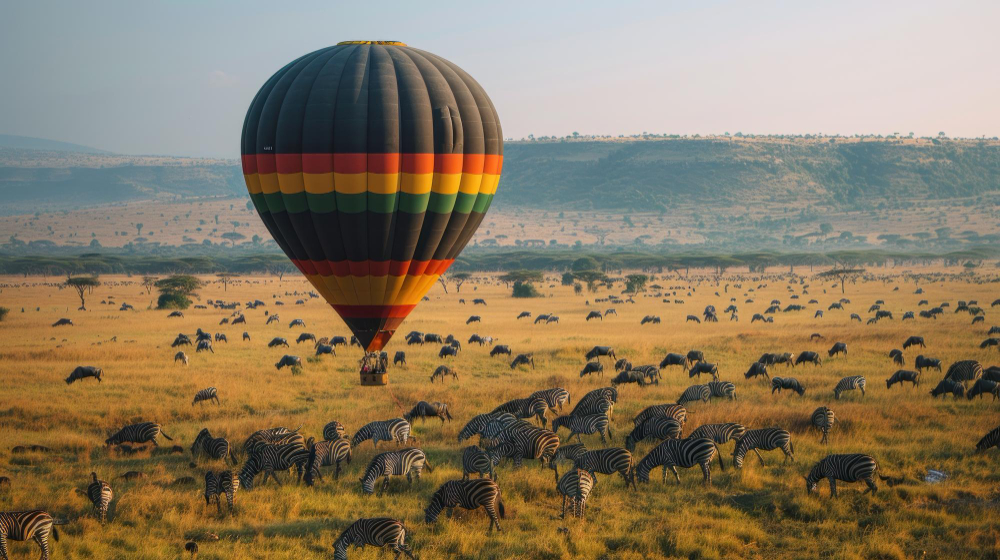
The main reserve is accessible and well-serviced, but specialists consistently recommend the private conservancies bordering it. Naboisho, Olare Motorogi, and Mara North are the best-regarded. The difference is significant. In the conservancies, game drive vehicles are limited by permit, meaning you will watch a leopard kill or a cheetah hunt without a ring of 12 other vehicles around you. Conservancy camps are also the only places in Kenya where guided bush walks and night drives are permitted. The experience is categorically different.
Migration river crossings are unpredictable by their nature. The wildebeest move when they decide to move, not on any fixed schedule. A good camp manager or guide will know where the herds are moving and position you accordingly. This is another reason why the choice of camp, and the quality of the guide within it, matters more in the Mara than almost anywhere else.
Three nights in the Mara is the specialist minimum. Two nights is possible but leaves you feeling short-changed. Four nights, particularly in a conservancy, allows the rhythm of the ecosystem to become familiar and the sightings to build into something coherent.
Amboseli
Amboseli National Park sits at the foot of Mount Kilimanjaro in southern Kenya, and its particular gift is what no other park in Africa offers: elephant families walking through open savannah with the snow-capped peak of Kilimanjaro rising 5,895 metres behind them. The photographs are extraordinary. The reality is even more so.
Amboseli's elephants are among the best-studied in the world. The Amboseli Elephant Research Project has been tracking specific family groups since 1972, and some camps can connect guests with researchers for a morning in the field. The elephant herds are large, habituated to vehicles, and visible at close range. Amboseli is also excellent for black-and-white colobus monkeys, hippos in the Amboseli swamps, and large concentrations of wildebeest and zebra.
The timing consideration at Amboseli is specific: go at dawn. Kilimanjaro clouds over by mid-morning almost every day, and by noon the peak is typically hidden. The early light, pink and gold across the plains with the mountain fully visible, is what you have come for. Camps that offer early departures (before 6am) are the specialist's choice.
Two days and two nights is the right Amboseli pacing. It is compact enough to combine comfortably with the Mara and the Rift Valley without turning the trip into a logistical exercise.
Lake Naivasha
Lake Naivasha sits in the Rift Valley roughly two hours from Nairobi, and it is the destination that most Kenya itineraries skip and specialists always include. The lake is a freshwater ecosystem surrounded by yellow fever trees, papyrus, and flooded forest, and it is home to one of East Africa's most concentrated hippo populations.
The classic Naivasha morning starts on the water. A local boat takes you to within metres of hippo pods at rest, to the fish eagles hunting the shoreline, and to the pelicans working the reed beds. The lake is calm, the light is extraordinary, and the whole experience costs almost nothing compared to the Mara.
Hell's Gate National Park adjoins the lake and offers something genuinely unusual in East African wildlife: you can walk and cycle among the game. Giraffes graze beside the cycling path. Zebras ignore you. The gorge at the park's southern end is dramatic and geological, with hot springs that locals still use. A half-day cycling through Hell's Gate is one of the most unexpected pleasures in Kenyan travel.
Elsamere, the former home of Joy Adamson of Born Free, sits on the lake's southern shore and offers afternoon tea with colobus monkeys for company. For families or travelers interested in Kenya's wildlife conservation history, it is worth the visit.
Lake Nakuru
Lake Nakuru is 45 minutes north of Naivasha and completes the Rift Valley loop. The lake is a UNESCO World Heritage Site and known for two things above all: flamingos and rhinos.
The flamingo numbers at Nakuru fluctuate depending on the alkaline algae levels, and while the millions that once turned the whole lake pink have dispersed to some degree across other Rift Valley lakes, the concentration that remains is still extraordinary. Black and white rhinos are reliably sighted within the park's fenced sanctuary, and Nakuru is one of the best places in Kenya for rhino at close range.
Specialists typically position Nakuru as a half-day add-on from Naivasha rather than a standalone overnight. It slots into the Rift Valley loop neatly: Lake Naivasha for the afternoon and morning, Lake Nakuru for the following morning before driving north or returning to Nairobi.
Specialist-Recommended Pacing
A minimum of eight days is required to do Kenya justice. Ten days is the sweet spot.
A specialist-designed 10-day Kenya structure looks broadly like this:
- Days 1 to 2: Nairobi, Giraffe Centre, Karen Blixen Museum, National Museum, Nairobi National Park morning drive, city dinner.
- Days 3 to 4: Amboseli, fly or drive from Nairobi, two full days of dawn and afternoon game drives, elephant researcher morning optional.
- Day 5: Transfer to Lake Naivasha, hippo boat afternoon, Elsamere tea.
- Day 6: Hell's Gate cycling morning, Lake Nakuru half-day afternoon.
- Days 7 to 9: Maasai Mara, fly from Naivasha or Nakuru airstrip, three full days of game drives in conservancy, balloon safari on Day 8.
- Day 10: Return to Nairobi for international departure.
This structure avoids unnecessary backtracking, maximises wildlife time, and gives each region its proper weight. Adjustments for Migration timing, family travel, or specific interests are where the specialist's knowledge adds the most value.
Key Experiences
- The Great Migration river crossing. Between July and September, wildebeest gather at the Mara River in herds of thousands before crossing into the Mara grasslands. Crocodiles wait. The herds hesitate, surge, and scramble. It is the most dramatic wildlife spectacle on earth.
- Hot air balloon over the Mara. A dawn balloon flight over the Mara is a once-in-a-lifetime experience. An hour above the plains in near silence as the sun rises, watching the ecosystem wake below you, followed by a bush breakfast with champagne. Book through your camp. Budget premium, but worth it.
- Amboseli elephants at dawn with Kilimanjaro. This is the photograph. This is also just the photograph. The reality of being among those herds with the mountain rising behind them is something a photograph does not fully prepare you for.
- Hippo boat on Lake Naivasha. A quiet morning on the water, close enough to hear hippos exhale, with fish eagles overhead and papyrus walls closing in on the channels. Genuinely peaceful and genuinely wild.
- Bush walk in a private Mara conservancy. Walking among big game with a Maasai guide changes how you understand the ecosystem. It is slower, quieter, and more textured than a game drive, and it is only available in the conservancies.
Practical Considerations
Visa: Kenya offers an e-visa through the official government portal (evisa.go.ke). Most nationalities are eligible. Apply at least two weeks before departure. Yellow fever vaccination certificate is required for entry if you are arriving from a country with yellow fever risk. Check current requirements with your specialist.
Budget: Kenya safari ranges from mid-range ($300 to $500 per person per night all-inclusive in a reputable tented camp) to premium ($800 to $1,500+ per person per night in a private conservancy). Nairobi accommodation and ground transport are significantly more affordable. The right budget depends on what you want from the experience.
Internal transport: Wilson Airport in Nairobi handles most charter flights to the Mara, Amboseli, and Laikipia. Safari Link, Air Kenya, and Safarilink offer scheduled services. Charters offer more flexibility. Your camp can advise on which airstrip to use.
Health: Malaria prophylaxis is recommended for most regions. Discuss with your GP or travel health clinic well in advance of departure.
How Begovo Specialists Build Kenya Itineraries
Kenya planning has layers that are not obvious from the outside: which conservancy to book for the Mara, when to move between regions, how to sequence the circuit to avoid wasted travel days, which camps genuinely deliver on their descriptions and which rely on glossy marketing. These are the decisions where specialist knowledge translates directly into a better trip.
Begovo specialists work with vetted ground operators across the Mara conservancies, Amboseli, and the Rift Valley. They know which camps have the best guides, which airstrips cause the least disruption to the safari rhythm, and how to time the Amboseli departure so you are on the lake at Naivasha for the correct morning light.
They also know Kenya well enough to tell you when not to go and what to skip, which is sometimes the most useful thing a specialist can say.
Browse Travel Anytime to see how Kenya fits within Begovo's fully supported travel framework. Or go directly to the source.
Frequently Asked Questions
What is the best month to visit Kenya for the Great Migration?
The river crossings in the Maasai Mara typically peak between July and September. August is often the most dramatic month, but wildebeest movements depend on rainfall and grazing patterns. A specialist can help you time your trip based on current forecasts and camp availability.
Do I need a yellow fever vaccination for Kenya?
Yes, if you are arriving from a country with yellow fever risk. Even if you are travelling directly from the US or Europe, some airlines may ask for proof. Check the latest requirements with your specialist or a travel health clinic.
Can I combine Kenya with Tanzania or Rwanda?
Yes. Many travelers add the Serengeti in Tanzania or mountain gorilla trekking in Rwanda. Specialists can design multi-country East Africa itineraries that respect migration timing and border logistics.
Ready to plan your Kenya safari?
Go with Confidence. Every itinerary is specialist-verified before you travel.

Comments
No comments yet. Be the first to comment.
Leave a comment