Sri Lanka is compact on a map and genuinely vast in practice. The island is 65,610 square kilometres, roughly the size of Ireland, and holds within its borders a 2,500-year-old ancient capital, a colonial port city with genuine urban depth, a tea country hill region that belongs to a different climatic zone entirely, a west coast beach strip of enormous quality, an east coast that most travelers never reach, and a national park system that supports the highest density of leopards on earth.
The challenge with Sri Lanka is not finding things to do. The challenge is routing the island in a way that respects the monsoon split, moves between regions efficiently, and allows each destination its proper time. This guide covers how specialists approach that challenge, with city-by-city detail for Colombo, Anuradhapura, Bentota, Chilaw, and Ampara, and the honest pacing and timing advice that comes from knowing the country well.
Who Sri Lanka Is Right For
Sri Lanka is one of those rare destinations that works across an exceptionally wide range of traveler types. First-time Asia travelers find it approachable and English-speaking. Experienced travelers find layers of cultural and historical depth that reward extended time. Wildlife travelers find leopards, elephants, sloth bears, blue whales, and one of the world's great bird lists. Beach travelers find two coasts with different seasons, different characters, and different reef systems. History and archaeology travelers find a civilisation older and more sophisticated than most people know.
Sri Lanka is also consistently excellent value. The combination of quality, accessibility, and cost positions it as one of the most competitive destinations available to travelers from the US, UK, Europe, and GCC. The food is serious and regional — the coastal fish curries differ from the hill-country curries, which differ from the Jaffna-style dishes of the north — and eating well in Sri Lanka costs almost nothing.
Ask begovo if you are considering Sri Lanka alongside other Asia destinations and want an honest comparison of what each offers at your budget and timeline.
Best Time to Visit Sri Lanka
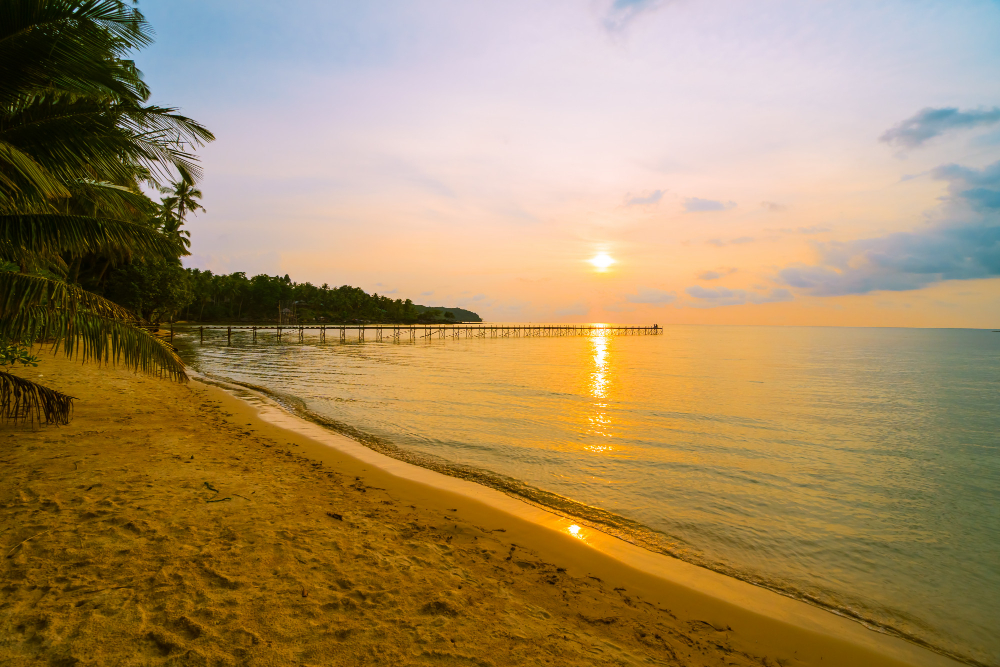
This is the most important section of any Sri Lanka guide, because the island's monsoon system means that the correct timing for one coast is the wrong timing for another. Getting this wrong is the single most common Sri Lanka planning mistake.
Sri Lanka has two monsoon seasons:
- The Yala monsoon (May to September) brings rain to the south and west coasts and the hill country. During this period, the east coast and the ancient cultural triangle (Anuradhapura, Polonnaruwa) are dry and excellent.
- The Maha monsoon (October to January) affects the north and east. During this period, the south and west coast (Colombo, Bentota, Galle, Mirissa) and the hill country are at their best.
The practical takeaway:
- If you are visiting between November and April, plan your itinerary around the west coast and the cultural triangle. Colombo, Anuradhapura, Bentota, Sigiriya, Kandy, and the tea country are all at their best.
- If you are visiting between April and September, plan around the east coast. Ampara, Arugam Bay, Trincomalee, and the eastern wildlife parks are dry and operating fully. The west coast is wet, the surf on Bentota is rough, and the whale watching from Mirissa is not at its best.
The overlap periods, October and April specifically, are the transition months, and specialists time itineraries carefully around them when clients have flexibility.
The hill country (Kandy, Ella, Nuwara Eliya) is largely above the monsoon system and remains relatively accessible year-round, though heavy rain is possible in both monsoon seasons and the most dramatic waterfall views require recent rainfall.
Colombo receives rain from both monsoons and is technically accessible year-round. The city's indoor culture, museums, galleries, restaurants, markets, is available regardless of season.
What to Expect Across Sri Lanka's Key Destinations
Colombo
Colombo is the first thing most visitors experience of Sri Lanka, and it deserves substantially more than the single night most itineraries assign it. The city is not beautiful in the way that Galle Fort is beautiful, but it has genuine urban character: a layered colonial heritage in its Dutch and British-era buildings, a food culture that is among the best in South Asia, and a set of neighbourhoods that reward slow walking.
Pettah is the old commercial district and the most viscerally alive part of the city. It is a sensory immersion of street markets, wholesale warehouses, mosques, Hindu temples, and food stalls, and it is best approached as a walking experience with enough time to follow streets that look interesting without a fixed agenda.
The Dutch Hospital in the Fort district has been converted into a restaurant and bar complex within a preserved 17th-century Portuguese hospital building. It is a rare case of adaptive reuse done with architectural sensitivity, and it is the specialist's recommendation for the first Colombo dinner.
The National Museum of Colombo is the obvious cultural starting point. The collection covers 2,500 years of Sri Lankan civilisation — the Kandyan regalia, the throne of the last Sinhalese king, the ancient temple frescoes and bronzes — and provides the historical context that makes the ancient cities in the north significantly more legible.
Cinnamon Gardens is the most elegant residential neighbourhood in the city: wide tree-lined streets, colonial bungalows, the Viharamahadevi Park (the city's central park, named for a Sinhalese queen rather than Queen Victoria, who it was formerly named for), and the Lionel Wendt Gallery for contemporary Sri Lankan art.
Specialists allocate one to two days to Colombo. Two days is the honest recommendation for travelers who want to absorb the city's character rather than simply check in and check out.
Chilaw
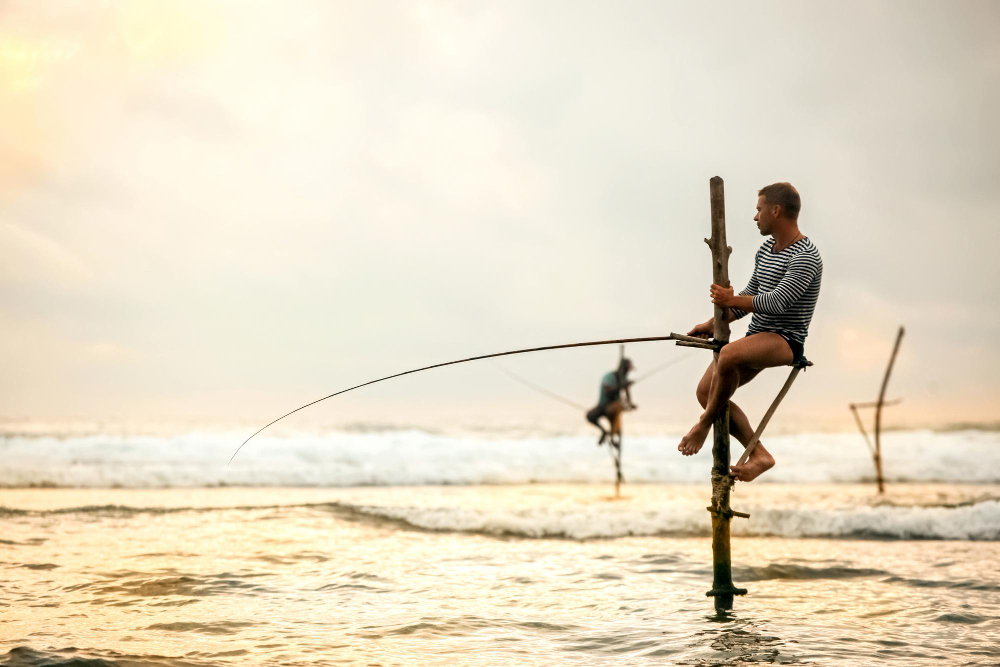
Chilaw is 90 kilometres north of Colombo on the northwest coast, and it is the destination on this list most likely to be unfamiliar. It is not a major tourist site. It is a working fishing town on a lagoon, and specialists include it as an overnight stop on the road between Colombo and Anuradhapura, a genuine pause in the transit that adds local colour without costing a full day.
The Munnesvaram Hindu temple complex is the town's most significant cultural site: one of the five ancient Shiva temples of Sri Lanka, serving both Hindu and Buddhist communities, active and fragrant with incense. Visiting requires modest dress, quiet movement, and some tolerance for the activity of a genuinely working temple rather than a heritage site.
The lagoon itself is lined with fishing boats that go out before dawn and return by mid-morning. The fish market on the lagoon edge operates from approximately 7am and is worth walking through. The Sri Lankan fish culture, the varieties of catch, and the scale of the daily landing are all genuinely interesting.
Chilaw is not for every itinerary. Specialists include it for travelers who want the texture of a real Sri Lankan town between the capital and the ancient cities, and who are happy to arrive at Anuradhapura in the afternoon rather than the morning.
Anuradhapura
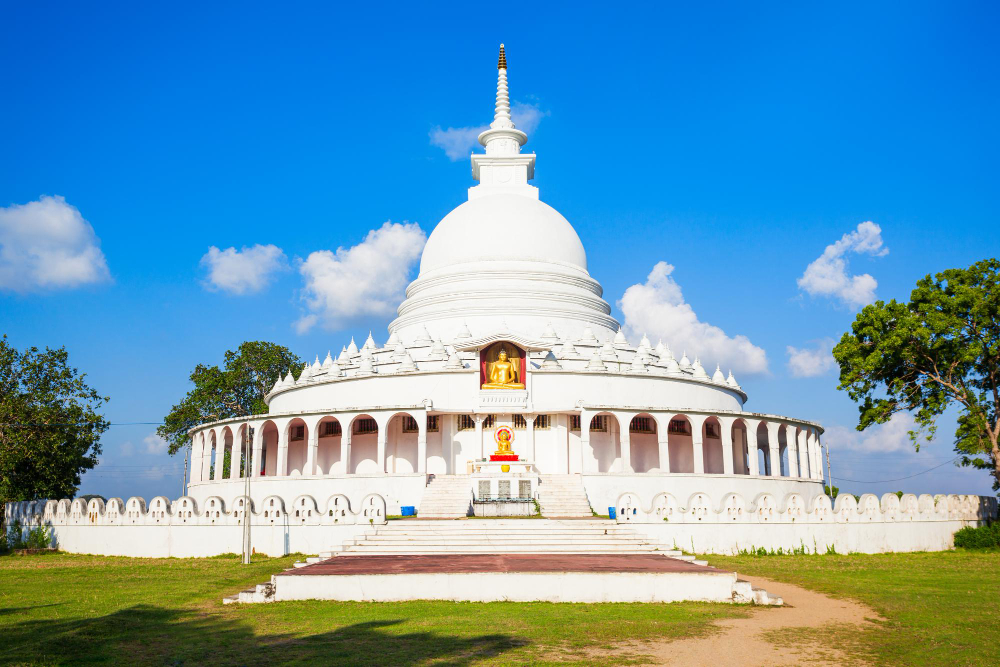
Anuradhapura is one of the oldest continuously inhabited cities in the world and the first capital of Sri Lanka, founded in the 5th century BC. It served as the political, religious, and cultural centre of Sinhalese civilisation for more than a millennium before its abandonment in the 11th century AD. The scale of what remains — stupas the size of small hills, moonstone-paved palace courtyards, bathing pools carved from solid rock, the oldest human-planted tree in documented history — is extraordinary.
The Sri Maha Bodhi is the most sacred site in Anuradhapura and one of the most sacred in all of Buddhism. It is a fig tree grown from a cutting of the original Bodhi tree under which the Buddha attained enlightenment in Bodh Gaya, India. It was planted in the 3rd century BC. It is the oldest historically documented tree in the world. The gold railing around it, the monks maintaining the site, the pilgrims who come daily from across Sri Lanka, and the simple fact of the tree's age create an atmosphere that is genuinely moving regardless of your religious background.
Ruwanwelisaya Stupa is the most photogenic of Anuradhapura's great dagobas, a white hemispherical reliquary mound 103 metres tall, ringed by an elephant wall, and visible from almost everywhere in the ancient city. Arriving at dawn, before the pilgrims but after the monks have begun their morning circuit, is the specialist recommendation.
Jetavanaramaya Stupa is the largest stupa in the world built by a single monarch and the third-largest structure in the ancient world at the time of its construction. At 122 metres, it was taller than any building in Rome or Greece at the time. It has not been fully restored, and the partly collapsed red brick form against the skyline has a melancholy grandeur.
Bicycles are the correct format for Anuradhapura. The ancient city is spread across several square kilometres and the sites are connected by roads that are manageable by bicycle, lined by trees, and busy enough to provide the social fabric of a living town alongside the archaeology. Bicycle hire is available everywhere. An experienced local guide hired for the full day transforms the visit. The context they bring to the sites, the inscriptions, and the history is not available in any guidebook.
Specialists allocate two nights to Anuradhapura. This gives a full day for the main monuments, a half-day for the outer sites and the archaeology museum, and a morning for the Mihintale hill (8 kilometres east, the site of Buddhism's introduction to Sri Lanka) before departing south.
Bentota
Bentota is on the southwest coast, 65 kilometres south of Colombo, and it is the specialist's beach choice for the west coast, preferred over the more heavily developed Negombo to the north and less touristically crowded than Hikkaduwa to the south.
The beach itself is a long curve of pale sand, calm water (November to April), and a line of palm trees so consistent it looks arranged. The Bentota River runs behind the beach before joining the sea at the town's southern end, and this river system is the source of Bentota's best experiences.
The Bentota River boat safari is a morning spent on a flat-bottomed boat moving through the mangrove channels, lagoon backwaters, and quieter tributaries. The wildlife is remarkable and genuinely accessible: monitor lizards (up to two metres long) sunning on the banks, estuarine crocodiles in the deeper channels, kingfishers in three or four species, purple herons, painted storks, and the occasional otter. This is not zoo wildlife. This is wild, and the boat driver will cut the engine to let you drift quietly past animals that are entirely unbothered.
The Kosgoda Sea Turtle Conservation Project is 8 kilometres north of Bentota and is one of the better wildlife conservation experiences in Sri Lanka. The project protects sea turtle nesting beaches and maintains a hatchery. Depending on the season, you may see hatchlings being released or adult turtles returning to nest. The project is legitimate, conservation-focused, and not a commercial entertainment experience.
Specialists position Bentota as the two-night trip finale before returning to Colombo for international departure. The combination of the beach, the river safari, and the turtle project fills two days without requiring a tight schedule.
Ampara
Ampara is in the Eastern Province, 300 kilometres northeast of Colombo, and it is the gateway to the east coast experiences that most west-focused itineraries entirely miss. The east coast of Sri Lanka is, depending on your timing, either the best or least accessible part of the island, and the distinction is entirely seasonal.
Between April and September, the east coast is dry, clear, and extraordinary. Arugam Bay, 60 kilometres south of Ampara, is one of the best surf breaks in Asia and one of the most authentic surf communities in the Indian Ocean, less developed than Bali, quieter than the Maldives, and genuinely affordable. The bay itself is beautiful beyond the surf: a wide curving crescent of sand, fishing boats dragged above the high-tide line, and a low-key social atmosphere that attracts a global mix of surfers, yogis, and beach travelers who prefer their coastlines without resort architecture.
Lahugala Kitulana National Park, 50 kilometres from Ampara, is one of Sri Lanka's most significant elephant gathering sites. Between August and October, when the Heda Oya reservoir fills, up to 150 elephants gather around the water and the lotus beds. This is not a fenced enclosure. These are wild elephants in their natural habitat, moving through the landscape in family groups, and the experience of watching them from a vehicle in the long afternoon light is genuinely remarkable.
The eastern province's Muslim and Tamil communities add a cultural dimension entirely distinct from the Sinhalese Buddhist culture of the south and centre. The food changes here, more Arabic and South Indian influence, excellent kottu variants, freshly caught fish cooked differently. Specialists brief clients on this cultural context before they arrive so that the east coast feels like a distinct chapter in the Sri Lanka story rather than an unexplained contrast.
Ampara and the east coast are included in specialist itineraries for clients traveling between April and September, for surfers at any level, and for travelers specifically interested in the eastern cultural and wildlife dimension. For a November to March itinerary, the east coast is typically replaced with Galle, Mirissa, and the hill country.
Specialist-Recommended Pacing
10 days: The west coast and cultural triangle (November to April)
Days 1 to 2: Colombo
Day 3: Drive north via Chilaw, overnight Anuradhapura
Days 4 to 5: Anuradhapura and Mihintale
Days 6 to 7: Sigiriya, Dambulla, Kandy (central cultural triangle)
Days 8 to 9: Bentota beach, river safari, turtle project
Day 10: Return Colombo, international departure
12 days: Full island including east coast (April to September)
Days 1 to 2: Colombo
Day 3: Drive north via Chilaw, overnight Anuradhapura
Days 4 to 5: Anuradhapura
Days 6 to 7: Drive east to Ampara, Lahugala elephants, Arugam Bay
Days 8 to 9: Arugam Bay, surf or beach
Days 10 to 11: Drive south to Yala, leopard safari
Day 12: Drive to Colombo, international departure
7 days: Kerala-comparable short circuit
Colombo (1), Chilaw overnight (1), Anuradhapura (2), Bentota (2), Colombo departure (1).
Key Experiences
- Sri Maha Bodhi at dawn. The oldest documented living tree in the world, in continuous religious service for 23 centuries, surrounded by monks and pilgrims in a temple complex built to protect it. An experience that is both archaeologically extraordinary and spiritually resonant regardless of your beliefs.
- Anuradhapura by bicycle. Hire a bicycle for a full day with a local guide. Move between the stupas, the ancient tanks, and the palace ruins at your own pace, through a landscape where the ancient city and the living town occupy the same geography.
- Bentota River wildlife safari. Two hours on a flat-bottom boat through mangrove channels with monitor lizards, crocodiles, and kingfishers. One of the most rewarding wildlife mornings in Sri Lanka and consistently cited by travelers as an unexpected highlight.
- Arugam Bay surf and beach. One of Asia's most genuine surf communities on one of the Indian Ocean's better waves. The bay is beautiful beyond the surfing, and the atmosphere (unhurried, international, and inexpensive) is one of the best beach experiences available to the informed traveler.
- Lahugala elephant gathering. Up to 150 wild elephants around a lotus-filled reservoir in August and September. No fences. No mahouts. Just elephants living their lives in a national park that most international visitors have never heard of.
Practical Considerations
Visa: Sri Lanka requires an Electronic Travel Authorization (ETA) for most nationalities. The official ETA portal is eta.gov.lk. The process is straightforward and takes approximately 24 hours for approval. Apply at least one week before travel to leave a margin.
Budget: Sri Lanka is excellent value across all tiers. Quality boutique hotels in Colombo and Galle range from $80 to $200 per night. Beach hotels in Bentota range from $100 to $250 per night. Meals in local restaurants cost $5 to $15 per person. Safari jeeps for national parks are approximately $50 to $80 per half day.
Transport: Trains are the romantic choice and genuinely excellent for specific routes. The Kandy to Ella hill country train is one of the most scenic rail journeys in Asia and should be booked in advance on observation car seats. For the full circuit from Colombo to Anuradhapura to the east coast to the south, a private driver provides the best combination of flexibility and efficiency.
Health: Standard Asia precautions apply. Mosquito protection is advisable. Tap water is not potable. The food hygiene in quality establishments is generally reliable.
How Begovo Specialists Build Sri Lanka Itineraries
Sri Lanka planning comes down to two things: getting the monsoon timing right and sequencing the island efficiently so that every day serves the trip rather than just moving between places. Both require knowledge that is not easily assembled from online research.
Begovo specialists know which months to target each coast, which Anuradhapura guide actually knows the archaeology in depth, which Bentota river captain finds the crocodiles consistently, and which camps in the east coast national parks have the best wildlife trackers. They also know how to build a Sri Lanka trip around the specific combination of interests (cultural, wildlife, beach, adventure) that the traveler brings to the planning conversation.
Sri Lanka rewards a specialist's involvement in a way that is measurable in the quality of every day. The itinerary that a specialist builds around your schedule and interests is categorically different from the standard circuit, and that difference shows in the trip.
Browse Travel Anytime to see how Sri Lanka sits within Begovo's fully supported travel framework.
Frequently Asked Questions
What is the best time to visit Sri Lanka for both coasts?
There is no perfect month for both coasts. The best you can do is April or October, the transition months between monsoons. In April, the east coast is starting to dry out and the west coast is still good. In October, the reverse is true. For a full island itinerary, specialists often recommend a 12‑day trip that starts on one coast and ends on the other, moving with the seasonal window.
Do I need a guide for Anuradhapura?
A guide is not required, but for the full experience, a local guide for at least a half day adds significant historical and religious context. The sites are vast and the inscriptions are in ancient Sinhala and Pali. Without a guide, you see the scale but miss the story. Specialists can arrange licensed guides who meet you at the Sri Maha Bodhi entrance.
Is Sri Lanka expensive for a two-week trip?
No. Sri Lanka is one of the best-value quality destinations in the world. A comfortable two-week trip with good hotels, a private driver, wildlife safaris, and most meals included typically ranges from $2,500 to $4,000 per person. This is significantly less than comparable itineraries in the Maldives, Thailand at the same quality tier, or many European destinations.
Ready to plan your Sri Lanka itinerary?
Go with Confidence. Every itinerary is specialist-verified before you travel.

Comments
No comments yet. Be the first to comment.
Leave a comment