Quick Answer
Banaue and Batanes are the Philippines' most distinctive cultural destinations beyond the beaches. Banaue offers the Ifugao rice terraces, a UNESCO World Heritage site built over 2,000 years, with the Batad amphitheatre village and Sagada's hanging coffins as key extensions. Batanes is the Philippines' northernmost frontier, home to the Ivatan people and their stone houses designed to withstand typhoons, with Sabtang Island preserving the best traditional villages. Reaching both requires specific logistics: an overnight bus from Manila to Banaue, and a direct flight to Basco Airport for Batanes with a mandatory buffer day for weather-related disruptions. The optimal combined window is March to May. This guide covers everything else.
Most Philippines itineraries follow the same logic: fly into Manila, connect to an island, repeat. It is an excellent strategy. Palawan, Siargao, and the Bohol to Cebu loop are genuinely world-class and deserve every recommendation they receive.
But two destinations in the northern Philippines, the Ifugao rice terraces around Banaue and the wind-sculpted Ivatan islands of Batanes, belong in an entirely different category. They are not beaches. They are not resorts. They are living cultural landscapes of rare distinction, built by peoples who developed in near-isolation and left behind physical evidence that rewards travelers willing to work slightly harder to reach them.
The honest description of these destinations is this: Banaue requires a commitment to a mountain road journey; Batanes requires a flight into the Philippines' most weather-dependent airport corridor. Neither is difficult for a prepared traveler with realistic expectations and, for most international visitors, expert planning support makes the difference between a trip that works and one that does not.
This guide covers both destinations at depth, explains the combined logistics transparently, and provides two practical itinerary frameworks that integrate either destination with a shorter island segment. Ask begovo before finalizing your Batanes flight dates; availability and weather-related disruption patterns are the two variables that require specialist coordination before anything else locks in.
Banaue: The Rice Terraces the Ifugao Built Over 2,000 Years
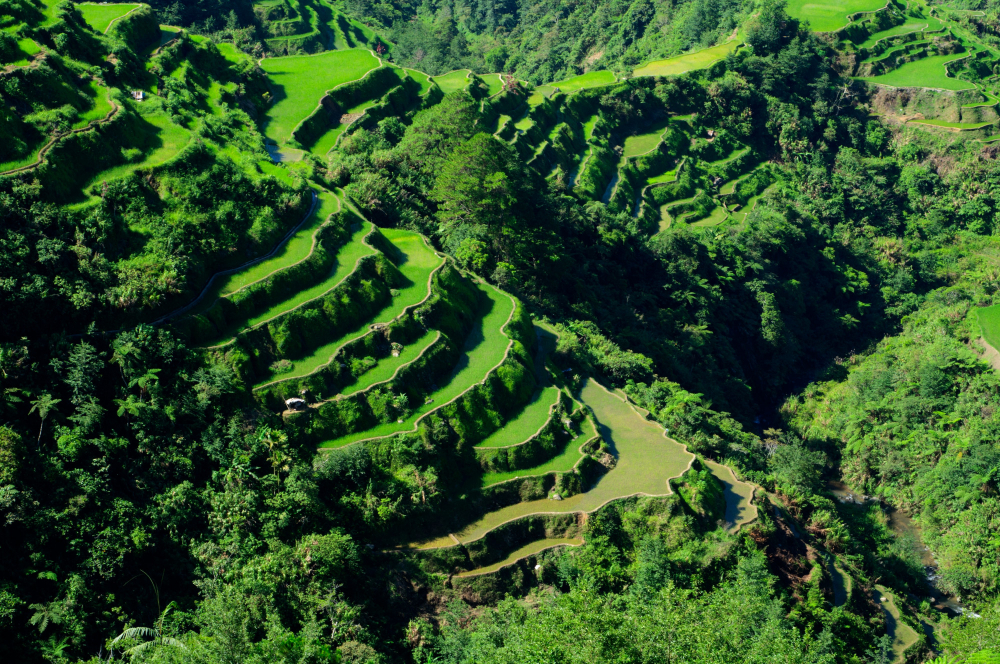
The Banaue rice terraces are not a single site but a system of irrigated terraces spread across the mountains of Ifugao Province in north-central Luzon, constructed by the ancestors of the present-day Ifugao people over a period exceeding 2,000 years. The terraces sit at elevations reaching approximately 1,500 metres above sea level and cover mountain slopes across the municipalities of Banaue, Hungduan, Mayoyao, Kiangan, and Asipulo.
A note on the age question: some academic archaeological debate exists around the terraces' construction timeline. The Philippine government, Britannica, and UNESCO documentation cite 2,000+ years. A 2020 archaeological study published in Esquire Philippines suggested the irrigation systems may have reached their current form in the 1600s to 1700s. The honest framing is this: the Ifugao have farmed these mountains for at least 2,000 years, and the complex terracing system as it exists today took centuries to develop. Either way, what travelers are looking at is among the most sophisticated pre-industrial agricultural engineering in Southeast Asia, stone-walled terraces that hold water on near-vertical slopes, fed by a forest-based irrigation system that the Ifugao maintain to this day.
The terraces were inscribed as a UNESCO World Heritage Site in 1995. UNESCO subsequently placed them on the List of World Heritage in Danger in 2001, primarily due to concerns about the declining number of Ifugao farmers maintaining the terraces, a consequence of younger generations leaving for urban employment. Restoration efforts, including government and community programs to encourage Ifugao youth to return to farming, have shown partial progress.
Batad: The Amphitheatre Terrace Village
Batad is the most visually arresting of the terrace clusters around Banaue, though it is not the easiest to reach. The village sits in an enclosed mountain bowl, locals often describe the terrace formation as an amphitheatre, at roughly 1,200 metres altitude, accessible only on foot from a junction point called "The Saddle" approximately 14 km from Banaue town.
The hike from the Saddle junction to Batad village takes approximately 45 to 60 minutes on a footpath. No road connects Batad to the wider highway network; this is the source of both its visual perfection (no visible modern infrastructure has interrupted the terrace landscape) and its tourism value. From Batad, a further 30 to 45 minute descent leads to Tappiyah Waterfall, a 25-metre cascade at the base of the terrace system, where the pool is cool and swimmable.
The correct way to experience Batad is to stay at least one night in the village guesthouses, simple, clean accommodation run by Ifugao families. Arriving in the afternoon, watching the evening light change the colour of the terrace water walls, and departing the next morning before day-trippers arrive from Banaue town gives a quality of experience impossible to replicate on a day trip.

Bangaan: The Quieter Terrace Village
Bangaan village, closer to Banaue town and accessible by jeepney from Banaue's main junction, offers a more intimate encounter with a lived Ifugao community. The terraces here differ in formation from Batad, flatter, more layered, with the village houses clustered on a ridge above, and the absence of Batad's visitor volume means that time spent in Bangaan feels more like genuine rural Philippines.
The standard Banaue circuit, Bangaan for a morning walk, afternoon drive to the Saddle junction, overnight in Batad, waterfall hike, return to Banaue, covers both villages' characters without overloading either into a rushed day trip.
Sagada: The Cultural Extension
Sagada, in Mountain Province, sits approximately 50 to 60 km west of Banaue by mountain road. It is a separate municipality (not Ifugao Province) with a distinct cultural character, the Kankana-ey people of Sagada practice a tradition of hanging coffins on limestone cliff faces in Echo Valley, one of the Philippines' most photographed and most often-misunderstood cultural sites.
The hanging coffins of Sagada are not a recent practice for tourist appeal. They represent a traditional Kankana-ey belief that placing the deceased closer to the sky brings them closer to their ancestors. The practice dates back several hundred years, though it is maintained today only by a small number of families. Most coffins visible on the cliffs were placed generations ago; the practice continues but is now rare.
Sagada also offers the Sumaguing Cave, a significant limestone cave system accessible with a guide and a lantern, involving ladder descents and river passages. The cave requires physical agility and is typically two to three hours round trip.
For a Banaue-focused itinerary, Sagada works as a two-night detour before returning to Manila through Baguio, adding two extra days to the core Banaue circuit and deepening the mountain Philippines experience significantly.
Batanes: The Philippines' Northernmost Frontier
Batanes Province sits at the northern edge of the Philippine archipelago, separated from Taiwan by the Bashi Channel, a narrow strait of open Pacific Ocean. The province comprises ten islands, of which three are inhabited: Batan Island (where the provincial capital Basco is located), Sabtang Island, and Itbayat Island.
The Ivatan people, who have inhabited Batanes for at least 4,000 years as traced through Austronesian migration research, developed one of the Philippines' most distinctive cultures in near-complete isolation from the mainland. Their architecture, language, agricultural practices, and social structures evolved in direct response to Batanes' defining physical characteristic: typhoons.
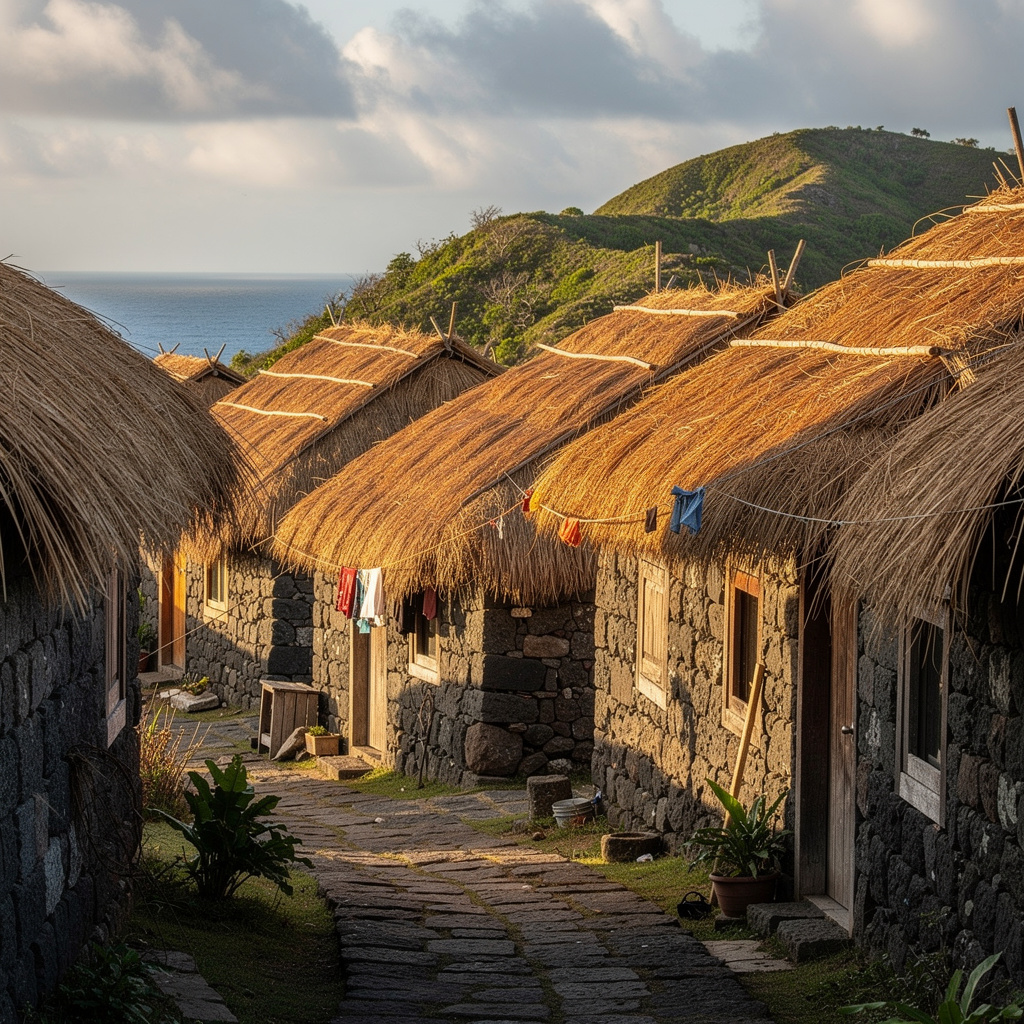
Batanes lies in the path of a majority of the tropical cyclones that cross the Philippines each year. The Ivatan response to this was not to move but to build structures robust enough to withstand typhoon-force winds, stone houses with walls 80 cm to over one metre thick, constructed from limestone cobbles and mortar with cogon-grass thatch roofs. The thatch, traditionally 30 cm thick and secured with fishing nets and bamboo trellis, was designed specifically to flex rather than shatter under typhoon pressure.
The current stone house construction method was refined during the Spanish colonial period (late 1800s), when Spanish missionaries facilitated the large-scale production of lime and brought in masons from mainland Luzon to assist Ivatan builders. The essential character of the houses, their scale, their roof design, their community-built maintenance tradition (called kapayatep), remained Ivatan.
Batan Island and Basco
Batan Island is Batanes' largest and most accessible island, home to the provincial capital Basco and the province's only commercial airport, Basco Airport (BSO). The island's landscape is unlike anywhere else in the Philippines: rolling green hills in the centre of the island, framed by dramatic coastal cliffs and black sand beaches, with the cone of Mount Iraya, an active volcano at 1,009 metres, visible from almost every point on the island.
Batan Island's primary circuit includes:
- Vayang Rolling Hills: The island's most photographed inland landscape, sweeping grass hills with the coastline visible on multiple sides.
- Marlboro Country (Racuh a Payaman): Another rolling grass plateau on Batan's northern coast, named informally for its resemblance to Marlboro cigarette advertising imagery.
- Basco town: The provincial capital, small but with clear Spanish colonial street planning, a lighthouse on a cliff above the coast, and the Batan Municipal Hall.
- House of Dakay (Ivana, Batan Island): Built in 1887 from lime and stone, widely cited as one of the oldest surviving Ivatan stone houses.
A full Batan Island circuit by hired tricycle or motorbike covers the island's key sites in a single day, though two days allows for the pace the landscape rewards.
Sabtang Island: The Best Preserved Stone Village Circuit
Sabtang Island, a 40-minute motorized pump boat ride from Batan's Ivana port, holds the most intact concentration of traditional Ivatan stone houses remaining in the province. Chavayan village, on the western side of Sabtang, is described by cultural heritage writers as the clearest example of a traditional Ivatan settlement, rows of stone houses with cogon roofs, a church (Chavayan Church) that retains its original cogon grass roof, the only remaining church in Batanes to do so. Some Chavayan houses have stood for over a century.
The traditional Ivatan boat, the tataya, a small outrigger used for fishing, is still maintained and used by Sabtang fishermen. The Sabtang circuit also includes Nakabuang Beach (Morong Beach), accessible through a natural limestone arch formation that has become one of Batanes' most photographed coastal images.
A Batanes trip that excludes Sabtang Island misses the most important element of the province. The 40-minute boat crossing is weather-dependent (strong winds cancel crossings), which is one reason why booking at least three nights in Basco is the minimum that gives a realistic chance of reaching Sabtang.
Getting There: The Logistics Case for Planning in Advance
This section is the content gap that most Banaue and Batanes guides avoid addressing directly. The logistics of both destinations require specific advance action that is qualitatively different from booking a Cebu Pacific flight to Palawan.
Getting to Banaue from Manila
There is no direct flight to Banaue. The options are:
Option 1 — Overnight bus (the standard approach): Ohayami Trans and Coda Lines operate nightly buses from Manila (Sampaloc area terminals) departing around 10:00 to 10:45 PM. Journey time is approximately 8 to 10 hours depending on traffic, arriving in Banaue in the early morning (6:00 to 8:00 AM). This is the most commonly used route; the overnight timing means no daylight hours are lost to transit, and arriving in Banaue at sunrise with the early mist over the terraces is considered a highlight by many travelers. Buses are air-conditioned and reasonably comfortable; the mountain road from Manila north involves significant winding sections from approximately the midpoint.
Option 2 — Fly to Cauayan (CYZ), then private van: Cebu Pacific operates flights from Manila to Cauayan Airport (CYZ) in Isabela Province. From Cauayan, the onward transfer to Banaue by private van takes approximately 3.5 to 4 hours along mountain roads. Total journey time including the flight is approximately 5 to 6 hours, faster than the overnight bus, but significantly more expensive and requiring coordination for the Cauayan to Banaue van segment, which is not a scheduled service. A specialist manages this transfer; an independent traveler needs to arrange it in advance or on arrival.
Option 3 — Manila to Baguio (by bus or flight), then onward to Banaue: An alternative mid-route is to break the journey at Baguio City, a 5 to 6 hour bus from Manila (or 45-minute flight to Loakan Airport), and continue to Banaue from Baguio the following morning, approximately 4 to 5 hours by bus or private vehicle. This allows a night in Baguio and reduces the length of each individual transit leg.
Getting to Batanes from Manila
Philippine Airlines and Cebu Pacific operate direct flights from Manila (NAIA) to Basco Airport (BSO), Batanes. Flight time is approximately 1.5 to 2 hours. This is the primary route; there is no viable overland or sea route to Batanes from Manila.
The critical variable: Batanes' weather and Basco Airport's short runway mean flight cancellations and delays are more frequent than at other Philippine domestic airports. Northerly winds (Amihan season, November to February) can cause cancellations; so can active typhoons approaching from the Pacific. Travelers who book Batanes as a 3-night midpoint in a tightly scheduled itinerary, with non-flexible connections before and after, run a meaningful risk of weather-related disruption affecting the segment.
The correct approach:
- Build at least one buffer day into the Batanes segment to absorb a possible flight delay.
- Do not place Batanes immediately before an international departure. A Manila night before an international flight is the safest post-Batanes position.
- Book Batanes flights as far in advance as possible; seat inventory is limited, with typically 1 to 2 flights per day, and the aircraft are small (typically ATR 72 turboprops seating 70 passengers).
Seasonality: When to Go and What Changes by Month
The correct time to visit Banaue and Batanes differs from most of the Philippines, and it differs from each other.
| Period | Banaue / Ifugao | Batanes |
|---|---|---|
| Mar to May (Dry season, hot) | Best overall conditions, clear skies, cooler mountain temperatures (15 to 25°C at altitude), terraces being prepared for planting | Acceptable but increasingly warm; Sabtang crossings reliable |
| Jun to Aug (Early wet season) | Terraces bright green, some rain, occasional mist at altitude, most photogenic period for the terraces at their most lush | Transitional; increased storm activity begins, some crossing cancellations possible |
| Sep to Nov (Peak typhoon season) | Mountain roads can be affected by heavy rain; some trails are impassable after significant rainfall | High typhoon risk, avoid Batanes in peak typhoon months (September to October) unless accepting significant disruption risk |
| Dec to Feb (Amihan) | Cool and clear at altitude, good for trekking but colder evenings require layers | Northerly Amihan winds make Sabtang boat crossings unreliable; some flight disruptions |
Optimal Combined Window
The optimal combined window for Banaue and Batanes in one trip is March to May, dry season in the highlands, acceptable flight reliability to Batanes, and the widest range of activities accessible in both destinations without weather-related risk.
Two Practical Itinerary Combinations
Combination 1: Banaue + Palawan (14 Days)
This combination gives the deepest cultural immersion in the Philippines alongside its most acclaimed natural scenery, at the cost of two domestic flights and one Manila overnight connection.
| Segment | Days | Notes |
|---|---|---|
| Manila arrival + 1 night | 1 | Buffer for international flight arrival timing |
| Overnight bus Manila to Banaue | Night 1 | Ohayami Trans, depart ~10 PM |
| Banaue (Bangaan circuit, Batad overnight) | Days 2 to 4 | 3 nights including Batad waterfall hike |
| Optional Sagada extension | Days 5 to 6 | 2 nights adds hanging coffins, Sumaguing Cave |
| Return to Manila (overnight bus or Cauayan flight) | Day 6 or 7 | Reconnect to Manila for Palawan flight |
| El Nido, Palawan | Days 7 to 10 | Island hopping A and C, Nacpan Beach |
| Coron, Palawan | Days 11 to 13 | Kayangan Lake, Barracuda Lake, WWII wrecks |
| Manila depart | Day 14 |
Total domestic flights: 2 (Manila to El Nido; Coron or El Nido to Manila). Banaue segment uses overnight bus (no flight needed).
Combination 2: Batanes + Cebu / Bohol (14 Days)
This combination works for travelers who want Batanes' cultural distinctiveness paired with the more accessible Visayas island circuit, without adding Banaue's mountain logistics. It uses the March to May window when both destinations are at their most reliable.
| Segment | Days | Notes |
|---|---|---|
| Manila arrival + 1 night | 1 | |
| Manila to Basco, Batanes (flight ~2 hours) | Days 2 to 4 | 3 nights: Batan Island circuit, Sabtang day trip |
| Batanes to Manila to Cebu (flights, 1 Manila night) | Day 5 | Build in a Manila buffer after Batanes |
| Cebu City heritage, Moalboal sardine run | Days 6 to 7 | |
| Bohol: tarsier, Chocolate Hills, Balicasag | Days 8 to 11 | Ferry Cebu to Tagbilaran (2 hours) |
| Panglao free day + return to Cebu | Days 12 to 13 | |
| Cebu depart | Day 14 | International exit through Mactan to Cebu |
Total domestic flights: 3 (Manila to Basco; Basco to Manila; Manila to Cebu). Bohol requires no additional flight.
What to Realistically Expect: Managing Complexity Before You Arrive
These two destinations require honest expectation-setting. Neither is difficult in the way that an Everest base camp approach is difficult. But both sit outside the range of itineraries that book themselves.
For Banaue: The overnight bus is comfortable but is approximately nine hours on mountain roads. The Batad hike involves 45 to 60 minutes of steep mountain trail in each direction. Accommodation in Batad village is simple guesthouse standard, private rooms, shared or attached bathroom, no luxury. This is correct for the experience; it is not a resort destination. Budget travelers and experienced adventure travelers are the primary market, but the cultural depth on offer is as high as anywhere in the Philippines.
For Batanes: The island is small, most accommodation is guesthouse to mid-range boutique hotel standard, and the dining scene is limited to local restaurants and a small number of more established options in Basco town. The reward is a landscape and a culture that are genuinely unlike anywhere else in the Philippine archipelago, and the relatively small number of international visitors who make it to Batanes means that the experience still has the character of discovery.
The variable that converts a good Batanes trip into a great one is time. Three nights minimum; four nights is better. The difference between two nights (where a cancellation means you miss Sabtang entirely) and four nights (where a cancellation loses one day but you still complete the full circuit) is the difference between a trip that lived up to its potential and one that left you wishing you had stayed longer.
Most Philippines itineraries can be self-planned. The Banaue to Batanes combination is the exception, not because either destination is dangerous or inaccessible, but because the margin for logistical error is real and the cost of that error (a missed Sabtang crossing, a cancelled Batanes flight with no buffer day, a Batad hike started too late to return before dark) falls entirely on the traveler.
A Begovo specialist for this combination brings three things that are genuinely difficult to replicate independently: confirmed Batanes flight coordination with buffer logic built in, local guide arrangements in Batad and Banaue through contacts rather than walk-up operators, and the kind of contingency planning that means a cancelled Sabtang crossing produces an alternative day rather than a wasted one. This is the Philippines trip most high-value travelers say they never thought they would do, and almost always say was the best decision they made. Ask begovo to build a Banaue and Batanes itinerary around your dates, your available time, and which island combination you want to pair with the highlands.
Continue Reading
Batanes and Banaue are both month-dependent destinations. To understand exactly how the highland and Pacific weather patterns interact with Palawan and Visayas timing, the Philippines seasonal guide covers the variables:
When Is the Best Time to Visit the Philippines?
For the full multi-island Philippines picture including Palawan, Siargao, and the Visayas, the 10-day and 14-day itinerary frameworks show how Banaue and Batanes slot in:
10 Days in the Philippines: Two Itineraries That Actually Work
Frequently Asked Questions
What are the Banaue Rice Terraces and why are they significant?
The Banaue rice terraces are a system of irrigated mountain terraces in Ifugao Province, northern Luzon, built over a period exceeding 2,000 years by the Ifugao people. They sit at elevations reaching approximately 1,500 metres above sea level and represent one of the most sophisticated pre-industrial agricultural engineering achievements in Southeast Asia. The terraces were inscribed as a UNESCO World Heritage Site in 1995. They remain actively farmed by Ifugao families and are maintained through traditional community methods.
How do you get to Banaue from Manila?
The standard route is an overnight bus from Manila's Sampaloc terminal, departing around 10:00 to 10:45 PM and arriving in Banaue after approximately 8 to 10 hours. Operators include Ohayami Trans and Coda Lines. A faster but more expensive option involves flying from Manila to Cauayan Airport (CYZ) in Isabela, then a private van transfer of approximately 3.5 to 4 hours to Banaue, total journey time approximately 5 to 6 hours including the flight. There is no direct flight to Banaue.
Are flights to Batanes often cancelled?
More frequently than at most Philippine domestic airports, yes. Basco Airport's location in the Philippines' most typhoon-exposed province, combined with a short runway that limits operating windows in strong winds, means that weather-related delays and cancellations are a realistic planning variable rather than a rare exception. The practical response is to build a buffer day into any Batanes segment, avoid placing Batanes immediately before a non-flexible international departure, and use a specialist to monitor conditions around your travel dates.
Is Batanes expensive to visit?
Batanes is more expensive than most Philippine destinations, primarily because of the domestic flight cost (Manila to Basco return) and the limited accommodation supply driving up room rates. Budget accommodation exists in Basco for backpackers, but the destination broadly skews toward mid-range and above for international travelers. The overall trip cost is manageable for a mid-range traveler; it is not an ultra-luxury destination but it is also not a PHP 500-per-night guesthouse circuit.
What is unique about Ivatan culture in Batanes?
The Ivatan people descend from Austronesians who migrated to Batanes approximately 4,000 years ago and developed their culture in near-isolation. Their most visible cultural expression is the traditional stone house, built with limestone cobble walls up to one metre thick and cogon-grass roofs designed specifically to withstand typhoon-force winds. The houses are maintained through a community tradition called kapayatep, where neighbors collectively assist in re-thatching and repairing roofs. The best surviving examples are in Chavayan village on Sabtang Island and at the House of Dakay in Ivana, Batan Island.
Can you combine Banaue and Batanes in one trip?
Yes, but it requires 14 days minimum and careful logistics. The most practical combined routing goes: Manila arrival, Banaue (overnight bus) with 3 to 4 nights highlands, return Manila, fly Batanes with 3 to 4 nights, return Manila, island segment (Palawan or Visayas), depart. The two destinations share no direct transport connection; Manila is the hub between them. A specialist who can coordinate the Batanes flight booking, buffer-day logic, and Banaue guide arrangements makes this combination significantly more reliable.

Comments
No comments yet. Be the first to comment.
Leave a comment