Quick Answer
The Cebu to Bohol loop is the Philippines' most efficient multi-island combination. Cebu City and Tagbilaran are connected by OceanJet fast ferries with a crossing time of approximately two hours, with multiple departures throughout the day. No domestic flights are required if entering and exiting through Mactan-Cebu International Airport. Cebu offers heritage sites, Kawasan Falls canyoneering, and the Moalboal sardine run. Bohol offers the Chocolate Hills, Philippine Tarsier Sanctuary, and Balicasag Island's marine sanctuary. Seven days covers both islands without rushing; ten days adds meaningful depth. This guide provides the full routing and activity detail.
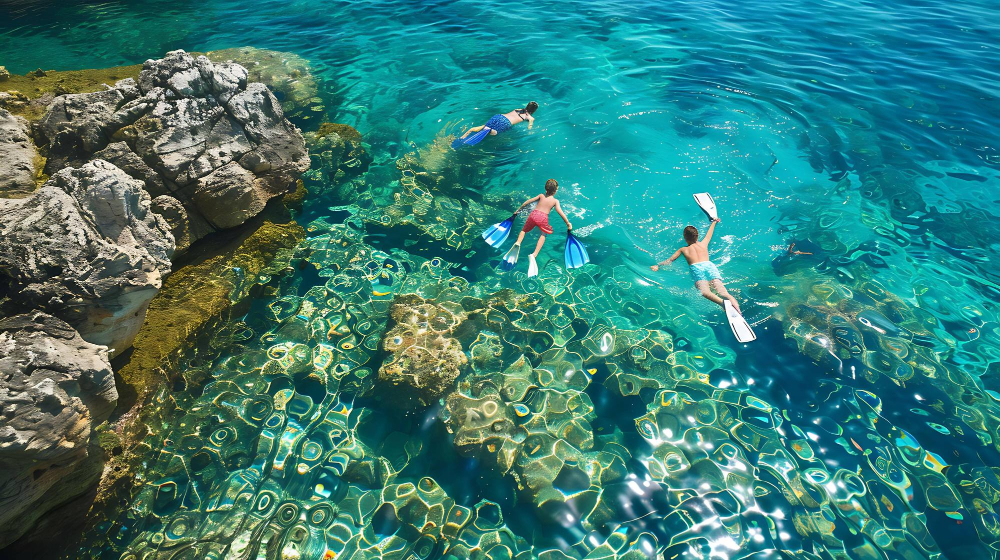
The single most common regret in a Philippines trip is not the island someone chose, it is the transit between islands they did not account for. Three hours in a van, a cancelled ferry, a domestic flight connection that required arriving two hours early in a provincial airport. The Cebu to Bohol combination exists partly to remove all of that.
Cebu city and Tagbilaran city, Bohol's main port, are connected by OceanJet and SuperCat fast ferries departing throughout the day from 5:10 AM to 6:40 PM, with a crossing time of approximately two hours. No domestic flight booking, no six-hour van transfers, no planning complexity. You leave one island in the morning and arrive on the other in time for lunch.
What makes the loop genuinely good, rather than just convenient, is that Cebu and Bohol do not repeat each other. Cebu is urban entry, coastal adventure, and waterfalls. Bohol is rural interior, prehistoric geology, and protected marine life. The two together give a seven-to-ten-day Visayas trip that covers more experiential ground than most multi-island itineraries that involve far more flying. Ask begovo to confirm the routing against your dates, particularly for peak season ferry availability.
Why This Combination Works: The Logistics and the Experience Case
Most Philippines island combinations require at least one domestic flight, and some require two. The Cebu to Bohol loop requires zero, if the international flight enters and exits through Mactan-Cebu International Airport (CEB), the entire multi-island trip operates without a single domestic flight booking.
The ferry is not a compromise over flying. The Cebu to Tagbilaran crossing is calm water inside the Visayan Sea, and the two-hour journey on OceanJet's fast craft is comfortable enough that it functions as a transition rather than a transit burden. Multiple departures throughout the day mean that if plans shift, a late checkout, a morning activity that runs long, the next ferry is typically an hour or two away rather than the next morning.
The experience case is just as clean. Cebu gives you:
- A heritage city that rewards a morning of walking (Magellan's Cross, Basilica Minore, the Carbon Market)
- Two of the Philippines' most distinctive adventure activities (Kawasan Falls canyoneering, Moalboal sardine run) within ninety minutes of Cebu City by road
- Urban infrastructure, international restaurants, reliable transport, hotel variety, that makes it the right landing point for international travelers
Bohol gives you the opposite:
- A geological landmark (Chocolate Hills) that has no equivalent anywhere in the Philippines
- The Philippine Tarsier, a globally distinct primate species found only in the southern Philippines and parts of Borneo and Sulawesi
- Panglao Island's beaches and the Balicasag marine sanctuary, which ranks among the best protected dive and snorkel sites in the Visayas
- The pace of a countryside island rather than a city base
Used together in the right sequence, arriving in Cebu, moving through its adventures, ferrying to Bohol for the inland and marine circuit, returning to Cebu to depart, this is the Visayas circuit that delivers the most experience per day without a single over-scheduled moment.
Cebu in Detail: What the City and Its Coasts Actually Deliver
Cebu City: Heritage, Food, and the Efficient Arrival
Cebu is the Philippines' second-largest urban center and its oldest city, founded by the Spanish in 1565. For travelers arriving from Manila or internationally through Mactan-Cebu International Airport, the city gives an excellent first day that does not require additional transport.
The heritage circuit, compact enough to walk in a morning, includes three sites within a few minutes of each other: Magellan's Cross, planted in April 1521 by Ferdinand Magellan's expedition as a symbol of Spanish Catholic claim; the Basilica Minore del Santo Niño, built on the site of the original Spanish church founded in 1565 and now the oldest Roman Catholic church in the Philippines; and the Heritage of Cebu Monument, a relief sculpture that depicts key events in Cebu's history from pre-colonial times to the present. The Carbon Market, five minutes away, is the oldest public market in the Philippines and one of the more sensory-rich market experiences in the Visayas.
For food, Cebu's defining contribution to Philippine cuisine is lechon, spit-roasted whole pig with skin that crackles at a tap and interior meat that remains moist. Cebu lechon differs from Manila versions in that the cavity is seasoned with lemongrass, onion, garlic, and bay leaf rather than left plain; the resulting flavor is more aromatic and considerably more celebrated. Food writers including Anthony Bourdain have described Cebu lechon as among the best pork preparations anywhere.
One Cebu City night is the correct allocation for first-time visitors, enough to cover the heritage circuit, experience the food, and orient before moving south.
Kawasan Falls Canyoneering: Three to Four Hours Through Limestone
Kawasan Falls canyoneering is the route that starts in Alegria municipality (Kanlaob village) and descends the Matutinao River canyon for approximately 4 to 5 kilometres to Kawasan Falls in Badian. The total activity time, from gearing up at the operator's base to emerging at the falls, runs approximately 3 to 5 hours depending on group pace and conditions, with an additional hour for transport to and from Moalboal or Cebu City.
The route features seven optional cliff jumps ranging from approximately 4 metres (13 feet) to 10 metres (33 feet), river swimming sections between narrow limestone walls, and a final arrival at Kawasan Falls' tiered turquoise pools. The difficulty level is intermediate, sustained physical activity and comfort with cliff jumping are the primary requirements. The tour ends at Kawasan Falls, a multi-tiered cascade fed by underground springs from the Mantalongon mountain range, where participants can swim before returning to base.
Practical notes:
- Operators are based primarily in Moalboal, approximately 90 km south of Cebu City (roughly 2 to 2.5 hours by bus or hired vehicle).
- The route runs from Alegria to Badian, covering Level 3, 2, and 1 of the canyon system in descending order.
- Morning departure is strongly recommended, afternoon groups encounter slower water flow in some sections and less time to return to Cebu City or Moalboal.
- Life jackets and helmets are provided by operators; water shoes or secure sandals are essential.
Moalboal: The Sardine Run and Balicasag Island
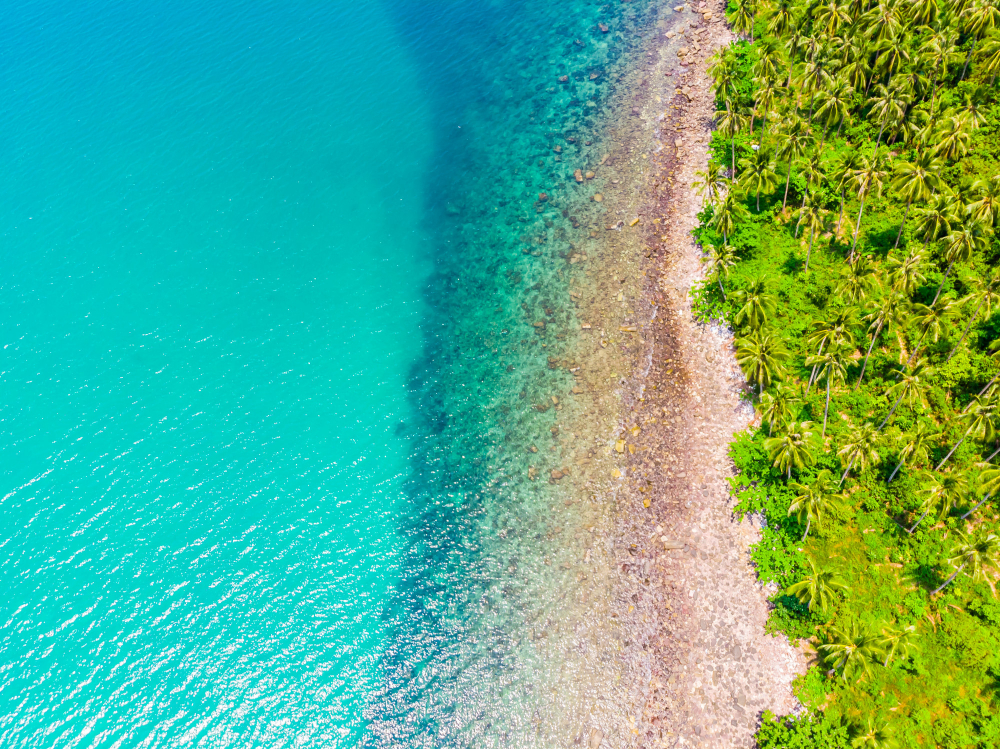
Moalboal's sardine run is one of the most unusual snorkeling experiences in the Philippines. An estimated millions of sardines (Sardinella lemuru, a species of the family Clupeidae) maintain a semi-permanent formation approximately 20 metres offshore from Panagsama Beach. The formation moves as a rotating, pulsing column, visible from the surface and swimable without fins or diving certification. The sardines maintain their position year-round, though visibility is best during the dry season (November to May).
The sardine run and the Kawasan Falls canyoneering route are commonly combined as a single day trip from Cebu City, sardine run snorkeling in the morning (the formation is accessible from around 6:00 AM), canyoneering in the afternoon or the following morning. The driving distance between Moalboal and the Badian/Alegria canyoneering start point is approximately 20 to 30 minutes, making them a natural pairing for adventure-focused travelers.
Balicasag Island, just off Panglao in Bohol, is the dive and snorkel complement to Moalboal's sardine experience, the two are different enough in character that covering both across the Cebu and Bohol sections of the trip gives the full Visayan marine picture: a pelagic sardine formation on one island, a protected coral marine sanctuary with wall diving, sea turtles, and schooling jacks on the other.
Bohol in Detail: Geology, Endemic Wildlife, and Panglao's Reefs
Chocolate Hills: What the Numbers Mean
Bohol Island became the Philippines' first UNESCO Global Geopark, a designation that provides the most authoritative framing for its geological significance. The Chocolate Hills are the geopark's centerpiece: a cone-karst landscape of 1,776 conical limestone hills spread across the municipalities of Carmen, Batuan, and Sagbayan, ranging in height from 30 to 120 metres (approximately 100 to 390 feet). They formed during the Plio-Pleistocene period through limestone uplift and subsequent weathering by rainfall erosion.
The hills are covered in cogon grass (Imperata cylindrica), which turns brown during the dry season (roughly March to May), producing the "chocolate" effect that gives them their name. During the wet season, the same hills are green, which changes the visual quality of the viewpoint significantly. The primary viewing platform is at Carmen, where a short uphill climb gives a 270-degree panorama of the formation extending to the horizon.
The Chocolate Hills were declared a National Geological Monument in 1988 and submitted to UNESCO's World Heritage Tentative List in 2006. In 2024, UNESCO designated Bohol Island as a Global Geopark, the 213th UNESCO Global Geopark in the world and the first in the Philippines, a status that reflects the island's broader geological significance beyond the Chocolate Hills alone.
Philippine Tarsier: The Ethical Visit
The Philippine Tarsier (Carlito syrichta) is endemic to the southern Philippines, Bohol, Samar, Leyte, Mindanao, and surrounding islands, and is one of the world's smallest primates. An adult tarsier weighs approximately 80 to 165 grams. Each eye is roughly the same size as its entire brain; unlike most mammals, tarsiers cannot rotate their eyeballs, which is why they rotate their heads up to 180 degrees.
The correct site for visiting is the Philippine Tarsier Sanctuary in Corella (managed by the Philippine Tarsier Foundation), where tarsiers live in a semi-wild environment within a forested sanctuary and are not handled or held. Roadside tarsier handlers operate throughout Bohol and use tarsiers as photo props, a welfare issue that causes visible distress to the animals, which are nocturnal and sensitive to light and noise. The sanctuary is the standard that ethical operators in Bohol use; a specialist will not book the roadside alternative.
Loboc River and the Bohol Countryside Circuit
The standard Bohol countryside circuit, Chocolate Hills, tarsier sanctuary, Loboc River cruise, covers the island's inland highlights in a single day with a private vehicle and local guide. The Loboc River Cruise is a floating restaurant experience on a flat-bottomed boat that travels slowly along the river for approximately one hour, with lunch served on board and cultural performances from riverside communities.
The circuit is correctly sequenced as: Tarsier Sanctuary (morning, before day-tourist crowds build) → Loboc River Cruise (late morning to midday) → Chocolate Hills at Carmen (afternoon, for better light in the hills). A guide who runs this sequence efficiently can reach Carmen by 3 to 4 PM, which gives usable golden-hour light on the hills during dry season.
Panglao Island and Balicasag
Panglao Island is connected to Bohol's main landmass by two bridges and is the natural base for most visitors staying on Bohol. Alona Beach is the main accommodation strip, a 600-metre stretch of white sand beach with resorts at varying price points, dive operators, and restaurants within walking distance of each other.
Balicasag Island is a 20-minute speedboat ride from Alona Beach and is a designated marine sanctuary. Its walls drop to significant depths and host:
- Schools of jacks (bigeye trevally) that mass in dense formations at the wall edges
- Green and hawksbill sea turtles in a turtle sanctuary area accessible on the sanctuary's eastern side
- Leopard sharks in the sandy patches around the sanctuary perimeter
- Coral coverage that is among the most intact in the central Visayas
For non-divers, the shallow areas and turtle sanctuary zone are snorkeling-accessible; the turtle encounters are close to the surface and do not require diving certification. For certified divers, Balicasag's wall dives (Cathedral, Black Forest) are among the standout Visayas dives.
Dolphin watching between Panglao and Pamilacan Island is a morning activity typically combined with the Balicasag boat trip, spinner dolphins are common in these waters, and the boat can divert to dolphin sightings before continuing to the sanctuary.
Sample Itinerary: 7 Days in Cebu and Bohol
This routing enters and exits through Cebu (Mactan-Cebu International Airport), requires no domestic flights, and covers the circuit's key experiences without over-scheduling.
Day 1 — Cebu City Arrival
Land at Mactan-Cebu International Airport. International arrivals, particularly from GCC hubs via Dubai/Abu Dhabi (approximately 7 to 9 hour flight) or from Singapore/Kuala Lumpur (approximately 2 to 3 hours), typically arrive at manageable times for a first-evening city orientation. Transfer to Cebu City (Makati or Ayala area; approximately 25 to 45 minutes from the airport depending on traffic). Afternoon: Magellan's Cross, Basilica Minore, Heritage Monument. Evening: lechon dinner.
Day 2 — Moalboal and Sardine Run
Depart Cebu City by hired vehicle at 7:00 AM, arrive Moalboal by 9:30 to 10:00 AM. Morning sardine run snorkeling at Panagsama Beach (entry from shore, approximately 20 minutes swim offshore). Afternoon: hire a boat to Pescador Island for additional snorkeling with sea turtles and coral, or rest at Moalboal. Optional: overnight in Moalboal to reduce the following day's logistics.
Day 3 — Kawasan Falls Canyoneering
Depart Moalboal or Cebu City for Alegria by 8:00 AM. Full morning canyoneering (3 to 4 hours active, finishing at Kawasan Falls Level 1 pools). Lunch at Kawasan. Return to Cebu City by late afternoon. Evening: pack and prepare for the Bohol ferry.
Day 4 — Ferry to Bohol and Countryside Circuit
Take OceanJet from Cebu Pier 1 to Tagbilaran, departing 8:20 AM or 9:20 AM (booking in advance recommended for peak periods). Arrive Tagbilaran by approximately 10:20 AM to 11:20 AM. Transfer directly to Corella for the Philippine Tarsier Sanctuary (morning visit). Loboc River cruise for lunch. Afternoon: Chocolate Hills at Carmen. Transfer to Panglao Island, check in. Evening: Alona Beach dinner.
Day 5 — Balicasag Island and Marine Sanctuary
Depart Alona Beach by boat at 6:30 to 7:00 AM for dolphin watching (spinner dolphins, approximately 30 to 45 minutes), then continue to Balicasag Island. Full morning: diving or snorkeling at the wall, sea turtle sanctuary zone, schooling jacks. Return to Panglao by noon. Afternoon: rest at resort or explore Panglao's Dumaluan Beach or the Hinagdanan Cave (a lit subterranean pool approximately 10 minutes from Alona Beach).
Day 6 — Free Day in Bohol
Options for this day: an additional dive at Balicasag or Cabilao Island (thresher sharks at Cabilao are the draw for advanced divers); a day trip to the Loboc Ecotourism Adventure Park (zip line across the Loboc River gorge); a slow morning walking Tagbilaran's San Pedro Parish (late 16th-century church); or a boat from Panglao to Pamilacan Island for a quieter snorkeling site. This day functions simultaneously as a weather buffer and a flexibility day for the itinerary.
Day 7 — Ferry Return to Cebu and Departure
Early morning ferry from Tagbilaran to Cebu (6:00 AM, 7:00 AM, or 8:20 AM OceanJet departures). Arrive Cebu by 8:00 to 10:30 AM. Transfer to Mactan-Cebu International Airport for international departure. Afternoon and evening flights work cleanly for this routing; morning international departures require the previous night in Cebu or a very early ferry.
Extending to 10 Days: What Three Extra Days Change
Three extra days in Bohol and Cebu do not simply add more activities, they change the pace of the whole circuit.
Additional days used well in Bohol:
- A second countryside day covering Bohol's less-visited interior, the Rajah Sikatuna National Park (primary forest with endemic species), the Bilar Man-Made Forest (a 2-kilometre stretch of dense mahogany trees planted in the 1970s), or the Baclayon Church (one of the oldest stone churches in the Philippines, built 1595 to 1727)
- A full additional dive day at Cabilao Island for advanced divers, or a mangrove kayaking circuit through Clarin
- The Loboc River firefly tour at night, a boat ride through mangrove-lined sections of the Loboc River to observe bioluminescent firefly colonies after dark
Additional days used well in Cebu:
- A full day on Malapascua Island in northern Cebu, reached by a 1-hour speedboat ride from Maya Port. Malapascua is globally significant for divers specifically because thresher sharks come to cleaning stations at Monad Shoal at depths of 20 to 30 metres, with dives timed for 5:30 to 6:00 AM to coincide with cleaning behavior.
- Osmeña Peak, the highest point in Cebu province at approximately 1,013 metres, reached by a 45-minute hike from Dalaguete and offering a wide view of Cebu island's spine
A 10-day Visayas circuit structured around Cebu (3 nights, including a Malapascua night) and Bohol (4 nights, including a Cabilao dive day) and one flexible transition night gives a qualitatively different experience from the 7-day version, less about maximizing coverage and more about sitting with the places long enough to feel them properly.
Essential Planning Information
Entering and Exiting Through Cebu
Mactan-Cebu International Airport (IATA: CEB) is the second-largest international gateway in the Philippines and handles direct international routes from Singapore, Hong Kong, Kuala Lumpur, Tokyo, Osaka, Dubai, and other hubs. For travelers originating from GCC airports, connections via Singapore (Cebu Pacific, Singapore Airlines connections) or via Dubai/Abu Dhabi (connecting to Manila then Cebu, or direct Cebu via Middle Eastern carriers) are the standard routing options. Entering through Cebu and exiting through Cebu eliminates Manila entirely from the Visayas circuit.
Ferry Booking and Practical Notes
OceanJet and SuperCat both operate the Cebu Pier 1 to Tagbilaran route with multiple departures. Booking ferry tickets online in advance is strongly recommended for peak season (Christmas to New Year, Holy Week/Easter, and summer peak in April to May) when passenger capacity fills significantly before departure. Ferry tickets can be booked through OceanJet's website or at the pier, but same-day availability is not guaranteed during peak periods.
The Tagbilaran ferry port is approximately 4 kilometres from central Tagbilaran city and 35 to 40 kilometres from Panglao Island's Alona Beach (approximately 45 to 60 minutes by hired vehicle or tricycle).
Best Time to Visit
November through May is Cebu and Bohol's dry season, the most reliable window for canyoneering (lower river risk, better visibility), sardine run snorkeling (clearer water), and Chocolate Hills turning brown. December through February is peak season: highest demand for ferry seats, busiest Alona Beach resort availability, and the highest accommodation pricing. March through May offers equivalent dry-season conditions at notably lower pricing and fewer crowds. June through October brings rain and stronger currents; Kawasan Falls canyoneering becomes higher-risk during heavy rainfall and is sometimes paused by operators.
On the Oslob Whale Shark Encounter
Oslob is approximately 2.5 hours south of Cebu City. The whale shark watching there, where whale sharks (Rhincodon typus, the world's largest fish) are attracted by daily feeding with uyap (small shrimp), is widely available and heavily trafficked. The feeding practice has drawn criticism from marine biologists for altering the sharks' natural feeding behavior, disrupting migration patterns, and concentrating multiple large animals in a small area with high boat density. The Cebu Provincial Tourism Office and several international marine conservation organizations have issued guidelines or advisories about the welfare implications of the feeding practice. For travelers who want whale shark encounters, Donsol in Sorsogon province (a non-feeding, boat-based encounter with snorkeling access to free-swimming sharks) is consistently identified by marine biologists as the more ethical option. A specialist will present both options with accurate context, the Oslob decision is one where the traveler deserves the full picture rather than a booking confirmation.
The Cebu to Bohol circuit is the Philippines multi-island combination where the logistics work in your favor from start to finish. No domestic flight coordination, no seat inventory issues, no weather-cancelled inter-island flights. Just a two-hour ferry between two islands that complement each other more completely than almost any other island pair in the country.
What a Begovo specialist adds to a circuit like this is the layer of detail that converts a good itinerary into the right one: the ferry departure that works with your Kawasan Falls timing, the Bohol accommodation that puts you close enough to Tagbilaran for the Tarsier Sanctuary morning start without sacrificing Panglao Beach access, the dive operator at Balicasag who runs private rather than group boats, and the confirmation that the international departure time from Cebu allows the morning ferry without requiring an overnight back in the city. Ask begovo to structure your Visayas circuit around how you actually want to travel, activity-heavy, leisurely, diving-focused, or family-paced.
Continue Reading
For timing, specifically which months bring dry-season conditions to Cebu and Bohol, and how the sardine run and canyoneering conditions change across the year, the Philippines seasonal guide has the detail:
When Is the Best Time to Visit the Philippines?
If the Visayas circuit is part of a longer Philippines trip that includes Palawan, the 10-day itinerary guide covers how to sequence the two without over-scheduling:
10 Days in the Philippines: Two Itineraries That Actually Work
Frequently Asked Questions
How long is the ferry from Cebu to Bohol?
OceanJet and SuperCat fast ferries from Cebu Pier 1 (Pier 4 for some operators) to Tagbilaran Port, Bohol take approximately 2 hours. Departures run throughout the day from approximately 5:10 AM to 6:40 PM, with up to 13 scheduled departures in each direction on weekdays. Book in advance during peak season.
How many days should I spend in Bohol and Cebu?
Seven days is the minimum that covers both islands without rushing: roughly 2.5 days of activities in Cebu (sardine run, canyoneering, city heritage) and 3.5 days in Bohol (countryside circuit, Balicasag diving, beach). Ten days adds meaningful depth, an extra Bohol dive day, Malapascua in Cebu, or simply slower pacing that makes the whole trip feel less scheduled.
Is it better to start in Cebu or Bohol?
Starting in Cebu is correct for most international travelers. Cebu's airport handles more international routes and serves as the natural arrival point; the adventure activities (Kawasan Falls, Moalboal) work well as Day 2 to 3 before the transition to Bohol's gentler countryside pace. Starting in Bohol is viable only if flying through Tagbilaran via Cebu Pacific domestic (from Manila) or if the itinerary prioritizes the Chocolate Hills immediately.
What are the Chocolate Hills and how many are there?
The Chocolate Hills are a cone-karst limestone formation on Bohol Island, 1,776 symmetrical conical hills spread across Carmen, Batuan, and Sagbayan municipalities, ranging in height from 30 to 120 metres. They were declared a National Geological Monument in 1988 and are part of the Bohol Island UNESCO Global Geopark, designated in 2024. During the dry season, the grass covering the hills turns brown, producing the "chocolate" appearance.
Is the Oslob whale shark encounter worth it?
The Oslob encounter is widely available but involves daily feeding of wild whale sharks with shrimp to attract them to a fixed location, a practice that marine biologists and conservation organizations have identified as disruptive to natural feeding behavior and migration patterns. Travelers who specifically want a whale shark encounter are better served by the Donsol experience in Sorsogon province, where encounters are non-feeding and boat-based with snorkeling access to free-swimming sharks. A Begovo specialist will explain both options honestly and book whichever the traveler chooses with the full picture in front of them.
Do I need a guide for the Kawasan Falls canyoneering?
Yes, canyoneering at Kawasan Falls is an activity that requires a certified operator and guide. Solo navigation of the Matutinao River canyon is not permitted, and the cliff jumps require instruction and safety supervision. Operators are based in Moalboal and Alegria; booking through a reputable operator (rather than a roadside seller) ensures certified guides, proper equipment (life jacket, helmet, wetsuit), and safety briefing at each jump point.

Comments
No comments yet. Be the first to comment.
Leave a comment