Quick Answer
Siargao is the Philippines' most talked-about island, and for good reason. It offers Cloud 9, one of Southeast Asia's most recognized reef breaks for advanced surfers, while beginner surfers can learn at Jacking Horse and Kermit. Non-surfers have the Naked to Daku to Guyam island hopping circuit, Sugba Lagoon, and Magpupungko Rock Pools. The island's weather runs on an almost inverted pattern relative to Palawan and Boracay: August to November is peak surf season, March to May offers the best conditions for non-surfers, and December to February is the least favorable window. This guide covers everything you need to plan your Siargao trip correctly.
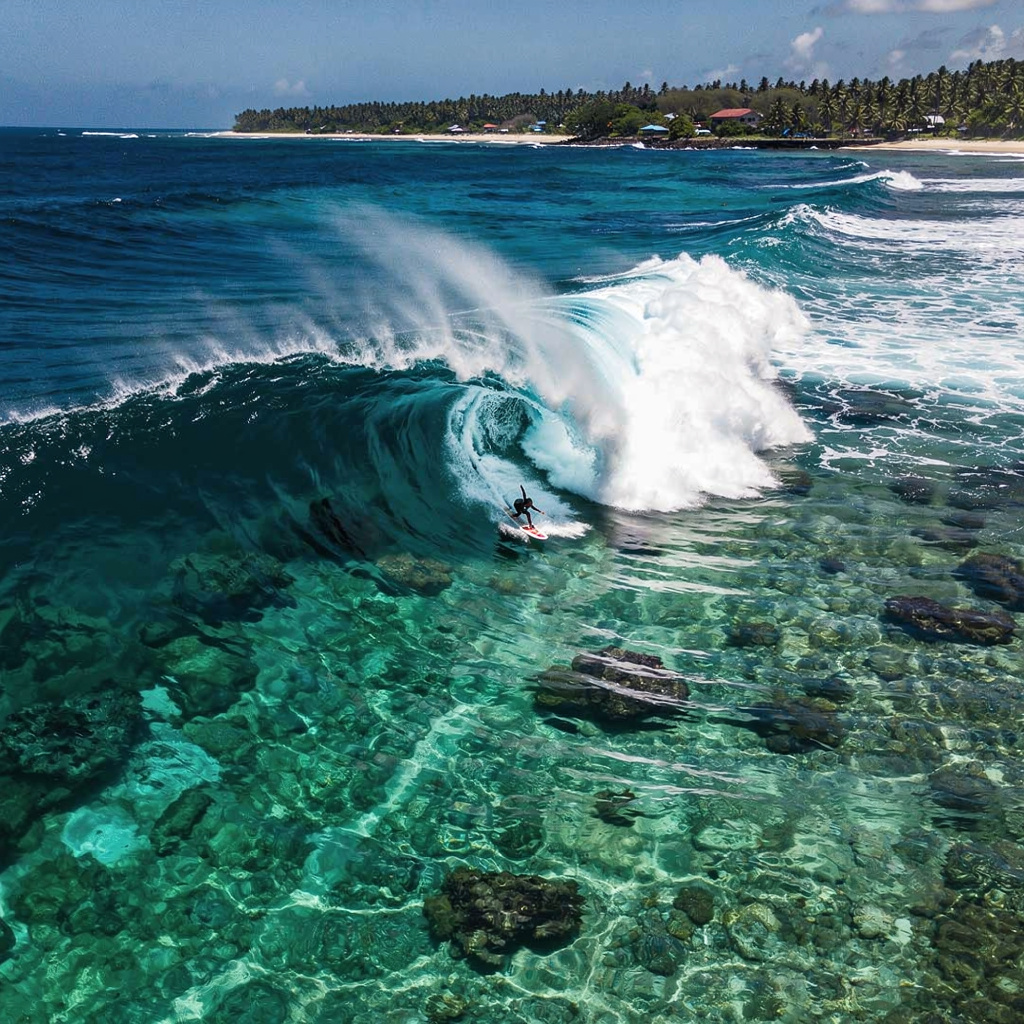
The word most commonly used to describe Siargao is "surfing capital." It is accurate, the island hosts the annual Siargao Surfing Cup and Cloud 9 is one of Southeast Asia's most recognized reef breaks. But framing Siargao as primarily a surf destination misses what has actually made it one of the Philippines' most talked-about islands over the past decade.
Siargao is flat, low-lying, and sits on the Pacific-facing coast of Surigao del Norte, which means its landscape is palm forests, winding mangrove channels, and a wide open sea horizon rather than limestone cliffs or highland scenery. That geography, combined with a clutch of genuinely original natural sites (Sugba Lagoon, Magpupungko Rock Pools, the Naked to Daku to Guyam island chain) and an accommodation scene that has moved well beyond surf camps, makes Siargao a destination worth understanding on its own terms, not just as a surf-or-skip proposition.
The honest answer to "is Siargao for me?" depends almost entirely on timing, expectation calibration about surf difficulty, and understanding how its weather sits relative to the rest of the Philippines. This guide answers all three. Ask begovo to build a Siargao itinerary around your actual interests, surf, non-surf, or a mix, before confirming your dates.
Cloud 9: What the Wave Actually Is
Cloud 9 is a right-hand reef break located off the coast of Barangay Cloud 9 in General Luna, on the eastern side of Siargao Island. It breaks over a shallow coral reef and produces a thick, hollow barrel, a specific type of wave where the lip pitches far over the trough, creating a tube that advanced surfers aim to ride inside.
The wave was named in the early 1990s by a group of surfers who discovered it, reportedly after eating Cloud 9 candy bars. It first appeared in international surf media in 1992 and became the site of the Siargao Surfing Cup, the Philippines' most significant competitive surfing event, shortly after.
The technical facts about Cloud 9:
- Wave type: right-hand reef break (occasional left on specific swell angles)
- Skill level: intermediate to advanced in low season (April to August, when swell runs 1 to 3 feet); advanced to professional in peak season (August to November, when NW Pacific swells push the wave to 4+ metres or 13+ feet)
- Best conditions: mid to high tide; southeast swell direction
- Difficulty: the break over sharp coral makes wipeouts genuinely dangerous, a hold-down on a shallow reef in overhead surf is a serious situation for anyone not experienced at reef breaks
- The iconic Cloud 9 surf tower boardwalk gives a viewing platform above the break, one of the best ways to watch professional-level surfing in the Philippines without entering the water
Who Cloud 9 is actually for: Advanced surfers with reef break experience during peak season (August to November). Intermediate surfers with an instructor can access it in the April to August low season when the wave is smaller and more forgiving. It is not a beginner wave under any conditions.
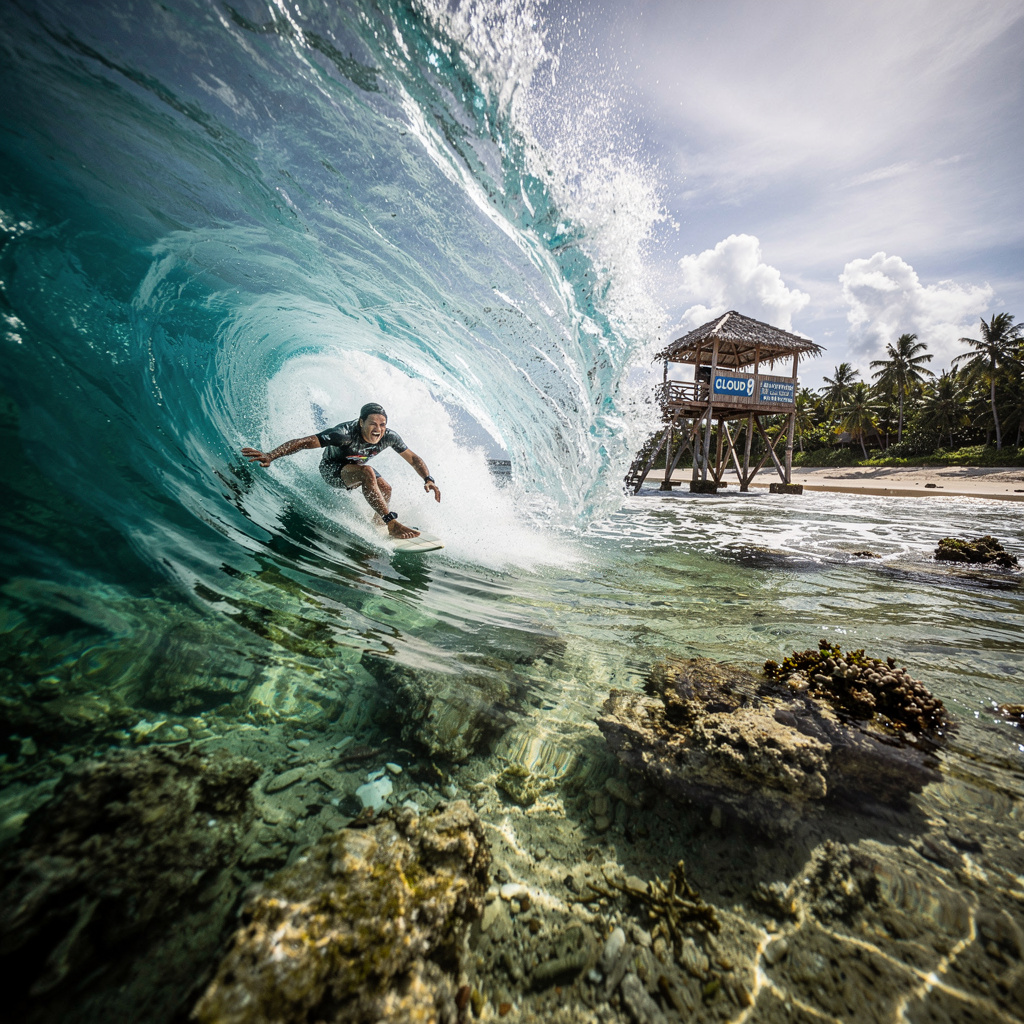
Siargao for Non-Surfers and Beginners: The Real Picture
The growth of Siargao as a mainstream travel destination is largely driven by non-surfers and surf-curious travelers who have no intention of paddling into Cloud 9, and the island accommodates this completely.
Beginner Surf Spots
Siargao has a concentration of surf breaks around General Luna, and several are appropriate for beginners with lessons:
- Jacking Horse (also known as Stimpy's): Described by surf guides as the most learner-friendly break in the General Luna area, beach-adjacent, less powerful than Cloud 9, and used by most surf schools for beginner lessons. Conditions are best during morning sessions when the wind is typically offshore.
- Rock Island: A sheltered, gentle break accessed by a short boat ride from General Luna. Lower consequence reef break; appropriate for early intermediates.
- Kermit: Directly in front of the Kermit Surf Resort in General Luna, a short, mellow wave commonly used for beginner and early-intermediate lessons.
- Tuason Point: Further down the coast from Cloud 9, this point break offers a longer wave face and is appropriate for intermediate surfers building confidence on reef.
Most surf camps in General Luna offer 1 to 2 hour beginner lessons at the learner-friendly breaks for approximately PHP 500 to 1,200 per session including board rental, with instructors who shift between spots depending on conditions and tide. Committing to three mornings of lessons at the beginner spots before watching Cloud 9 from the tower is the correct introduction for any first-time surfer.
The Island Hopping Circuit: Naked, Daku, and Guyam Islands
The standard Siargao island hopping tour departs from the General Luna wharf by outrigger banca boat and visits three islands in a half-day or full-day circuit.
Naked Island is a sandbar, a mound of white sand sitting in open water with no vegetation, no shade, and no structures. The name is literal. At low tide, more of the bar is exposed and the area appears larger; at high tide, the sandbar shrinks but the surrounding water is deep enough for swimming. There is no entrance fee; cost is included in the island hopping package. The island's value is photographic and experiential, being on a white sandbar completely surrounded by open sea, with nothing else in any direction, is a specific sensation that most beach experiences do not replicate.
Daku Island is the largest of the three and the only one with facilities, a fishing village, coconut palms for shade, cottages, and food stalls. Lunch on Daku is the standard midpoint of the island hopping tour, and the island's calm, shallow lagoon is suitable for swimming and paddling. Most full-day tours allocate 1.5 to 2 hours at Daku.
Guyam Island is a small, palm-covered islet with a curved white sand beach. Unlike Naked Island, it has shade and an intimate, enclosed beach feeling. The approach by boat gives a postcard-angle view of the palms and beach from the water before landing.
Standard island hopping tour rates range from approximately PHP 800 to 2,000 per person for group tours that include all three islands, a boat, a guide, and lunch. Private boat charters run higher and allow more flexibility in pacing and sequencing.
Sugba Lagoon
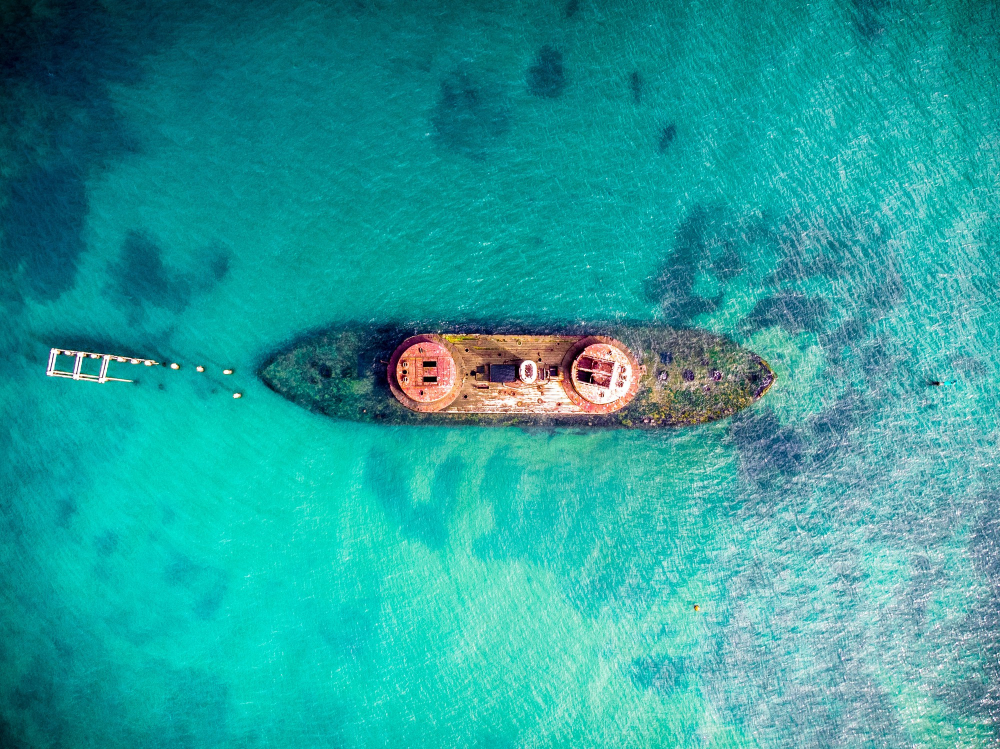
Sugba Lagoon is located on Coab Island (Barangay Coab), within the mangrove forest area of Del Carmen municipality on the western side of Siargao Island. Getting there from General Luna involves a 45-minute to one-hour drive to Del Carmen port, followed by a 20 to 30 minute motorized banca boat ride through Siargao's protected mangrove channels.
The lagoon itself is roughly 0.5 hectares of emerald-green water enclosed by forested banks and a rock formation at one end. It is calm enough for kayaking and paddleboarding (equipment available for rental at the entrance), and the rock formation is used for cliff jumping at approximately 3 to 5 metres into the water below. The surrounding mangrove landscape on the boat ride is part of the experience, Siargao's mangrove forest is among the most extensive in the province.
The practical note: Sugba Lagoon is often combined with a stop at Kawhagan Island, a small uninhabited island en route from Del Carmen with a white-sand beach and coconut palms, making the day trip a two-stop circuit. Tours can be booked from General Luna (including transport and boat), or DIY visitors can drive to Del Carmen and arrange a boat at the port.
Magpupungko Rock Pools
Magpupungko is a coastal site on the northeastern side of Siargao Island, approximately 45 minutes from General Luna by motorbike or vehicle. At low tide, the receding ocean leaves behind natural saltwater tidal pools in the rock formations, clear, calm, and warm enough for swimming. The pools vary in depth from shallow wading areas to pools deep enough to jump into from the surrounding rock ledges.
Timing is the critical variable: Magpupungko's pools are only accessible and swimable at low tide. Arriving at high tide means the rocks are submerged and the experience is simply a surf-exposed coastline. A local guide, a specialist booking, or a quick check of local tide charts before the trip ensures the visit is timed correctly. Morning low tides during the peak season are the standard recommendation.
Siargao's Weather: The Inversion That Changes Everything for Multi-Island Planning
This is the most underexplained aspect of Siargao in most travel content, and it is the single piece of information that matters most for anyone planning Siargao as part of a multi-island Philippines trip.
The Philippines broadly operates on a dry season (November to May) and a wet season (June to October) driven by the Habagat (southwest monsoon) and Amihan (northeast monsoon) systems. Palawan, Boracay, and Cebu/Bohol are at their best during the Amihan dry season (December to May) and become significantly more difficult to navigate during the Habagat wet season (June to October), with ferry cancellations, rough seas, and reduced visibility.
Siargao's weather runs on an almost inverted pattern.
Because Siargao sits on the Pacific-facing east coast of the Philippines, the southwest monsoon (Habagat, June to October) brings its best surf conditions, the NW Pacific swells generated during typhoon season reach Siargao's east coast and power Cloud 9 to its peak. Simultaneously, the northeast monsoon (Amihan, December to February) that gives Palawan its calmest weather hits Siargao's east coast harder, bringing rain and choppy conditions.
| Season | Palawan / Boracay / Cebu-Bohol | Siargao |
|---|---|---|
| Dec to Feb (Amihan) | Dry, calm, best conditions | Rougher seas, some rain, off-surf season |
| Mar to May | Dry season, excellent | Transitional, building swell |
| Jun to Aug | Wet season beginning, ferry disruptions | Building to peak surf season, warm |
| Sep to Nov | Habagat peak, rough, ferry cancellations | Peak surf season (Cloud 9 at best), busiest |
What This Means for Multi-Island Planning
You cannot optimally combine Palawan's dry season (December to May) with Siargao's peak surf season (August to November) in a single two-week trip. The two peaks do not overlap.
- For surf-priority travelers: Plan for August to November. Siargao will be at its best; accept that Palawan in this window means wetter weather and some ferry disruption risk. The Cebu to Bohol loop (which has a more moderate weather pattern year-round) combines better with Siargao than Palawan does in this window.
- For non-surf travelers: March to May gives Siargao's best mix of calm seas, island hopping access (weather is stable), and manageable surf at the beginner breaks, while still overlapping with the tail end of Palawan's dry season.
- For 14-day combination trips: A Manila to Palawan to Manila to Siargao structure during March to May gives both destinations at acceptable conditions. Attempting to add Siargao to a December to February Palawan trip works logistically, but Siargao in this window is less impressive, the surf is lower, the island hopping is subject to north coast chop, and the overall character of the island is quieter.
Getting to Siargao and Combining It with Other Islands
By air from Manila: Cebu Pacific and Philippine Airlines operate direct flights from Manila (NAIA Terminal 3) to Sayak Airport (Siargao, IATA: IAO). Flight time is approximately 1 hour 45 minutes to 2 hours. Sayak Airport is approximately 30 to 45 minutes by van or tricycle from General Luna, the island's main accommodation and surf hub. Seat inventory on this route is limited, particularly during peak surf season (September to November) when demand from domestic and international surfers concentrates. Book 3 to 5 months in advance for peak season travel.
By air from Cebu: Cebu Pacific operates direct Cebu (Mactan) to Sayak flights. Flight time is approximately 50 minutes to 1 hour. This is the standard connection for travelers combining the Cebu to Bohol Visayas loop with Siargao, eliminating the need to route back through Manila.
By ferry from Surigao City (mainland Mindanao): RORO (roll-on, roll-off) ferries operate from Surigao City port to Dapa, Siargao's main port, with a crossing time of approximately 1.5 to 2 hours. This route is relevant primarily for travelers already on Mindanao or those arriving by bus from Butuan City. For international travelers from Manila or Cebu, the direct flight remains the significantly more practical option.
How to add Siargao to a 14-day Philippines trip: The routing that works without creating excessive transit complexity:
- Manila to El Nido, Palawan (3 nights) to Coron (2 nights) to Manila (1 night transit) to Siargao (3 nights) to Manila depart (14 days total).
- Alternatively: Cebu City (2 nights) to Bohol (3 nights) to Cebu to fly Siargao (3 nights) to fly Manila to depart.
In both cases, Siargao functions as the final island before the Manila departure, not a mid-trip stop, which means the direct Manila flight for the exit journey is cleanly positioned.
Where to Base Yourself: General Luna and Beyond
General Luna is the correct base for first-time Siargao visitors. It is the island's main tourism hub, the Cloud 9 break is a 10-minute walk or tricycle ride away, the island hopping departures leave from the General Luna wharf, most surf camps are here, and the restaurant and café concentration is higher than anywhere else on the island.
Pacifico (northern Siargao) is the base for serious surfers who want less crowd around the Cloud 9 lineup and access to the northern breaks (Pacifico, Quicksilver). It is quieter, has fewer dining options, and is more appropriate for travelers who know what they want from the surf rather than those exploring the island broadly.
The accommodation range in General Luna spans from basic surf guesthouses (PHP 500 to 1,500 per night for a private room) to mid-range boutique hotels and villas (USD 80 to 200 per night), up to Nay Palad Hideaway at the luxury end. The design-hotel category, small, aesthetically driven properties with well-composed spaces, outdoor pool areas, and quality food, has grown significantly since 2020 and is now a genuine segment of the Siargao market rather than a novelty.
Practical ground transport: The standard Siargao transport is a rented motorbike (approximately PHP 300 to 500 per day) or a hired tricycle. Roads connecting General Luna to Magpupungko, Del Carmen, and the northern surfing areas are paved and manageable for confident riders. For travelers who prefer not to ride a motorbike, hired vans or tricycles cover the island sufficiently, though at higher per-trip cost.

A 5-Day Siargao Itinerary Framework
Day 1 — Arrival and Orientation
Land at Sayak Airport; transfer to General Luna (45 minutes). Check in, walk to the Cloud 9 boardwalk in the afternoon to watch the surf from the tower without commitment. Evening: dinner at General Luna's restaurant strip.
Day 2 — Beginner Surf or Surf-Watch Morning, Magpupungko Afternoon
Morning: beginner surf lesson at Jacking Horse or Kermit break if surfing is on the agenda; Cloud 9 tower watching if not. Check tide tables the evening before for Magpupungko, if low tide falls in the afternoon (roughly 12 to 3 PM window is ideal), dedicate the afternoon to the rock pools. If low tide does not align, swap Days 2 and 3.
Day 3 — Island Hopping: Naked, Daku, Guyam
Depart General Luna wharf at 8:00 to 9:00 AM by banca boat. Full day circuit: Naked Island (1 hour), Daku Island for lunch and swimming (1.5 to 2 hours), Guyam Island (45 minutes). Return to General Luna by 3 to 4 PM.
Day 4 — Sugba Lagoon and Kawhagan Island
Depart General Luna for Del Carmen by 7:30 AM. Drive approximately 45 to 60 minutes to Del Carmen port. Boat through mangroves to Sugba Lagoon (30 minutes). Morning at the lagoon: kayaking, cliff jump, swimming. En route back, stop at Kawhagan Island for lunch and beach time. Return to General Luna by mid-afternoon.
Day 5 — Slow Morning, Depart
Final morning surf lesson or Cloud 9 session for surfers; motorbike ride to Pacifico for a look at the northern coast for non-surfers. Transfer to Sayak Airport for afternoon or evening flight.
Siargao attracts two types of traveler who need completely different information: surfers who want to know about Cloud 9 specifically, and non-surfers who have seen the photographs and want to understand whether the island has depth beyond the break.
The honest answer is that it does, but the depth is distributed differently here than in Palawan or Bohol. Siargao's value is atmospheric and activity-specific: the island hopping circuit, Sugba Lagoon, Magpupungko, the design accommodation scene, and the particular feeling of being somewhere that has not yet been fully packaged. None of that requires surfing. What it does require is timing. Coming to Siargao in December or January without knowing about the northeast monsoon, or booking island hopping days without checking whether the sea conditions make the Naked Island circuit viable, is how the island gets a reputation it does not deserve. Ask begovo to build a Siargao itinerary around your dates, your surf ability, and whether you want Siargao as a standalone trip or as part of a broader Philippines circuit.
Continue Reading
Siargao's season inverts the rest of the Philippines. To understand exactly what each month means for conditions across the full island chain, including how to sequence Siargao with Palawan or the Visayas, the seasonal guide has the detail:
When Is the Best Time to Visit the Philippines?
If Siargao is part of a longer trip that includes Palawan, the 10-day itinerary guide covers the routing logic for combining both without over-scheduling:
10 Days in the Philippines: Two Itineraries That Actually Work
Frequently Asked Questions
Is Siargao good for beginners?
Siargao is good for beginner surfers at specific breaks, Jacking Horse, Kermit, and Rock Island, particularly during the April to August low season when swells are smaller. Cloud 9 itself is not suitable for beginners at any time of year; it breaks over a shallow reef at speeds and with wave thickness that require advanced reef-break experience. For non-surfers, Siargao is an excellent destination year-round based on island hopping, Sugba Lagoon, Magpupungko, and the accommodation scene.
When is the best time to visit Siargao?
For surfers: August to November for Cloud 9 at peak power (NW Pacific swells produce consistent 1 to 4 metre surf). For non-surfers and island hopping: March to May gives the calmest seas and most reliable conditions for all water-based activities, with fewer crowds than peak surf season. Avoid December to February if possible, this is Siargao's least favorable window, with northeast monsoon affecting sea conditions on the Pacific coast.
How do you get to Siargao from Manila?
Direct flights from Manila (NAIA T3) to Sayak Airport (Siargao, IAO) via Cebu Pacific or Philippine Airlines take approximately 1 hour 45 minutes to 2 hours. Sayak Airport is then 30 to 45 minutes from General Luna by hired van or tricycle. Advance booking is strongly recommended for peak season travel (September to November and December to February holiday periods).
What is Sugba Lagoon and how do you get there?
Sugba Lagoon is a protected emerald lagoon on Coab Island in Del Carmen municipality, on the western side of Siargao Island. To reach it, drive approximately 45 to 60 minutes from General Luna to Del Carmen port, then take a 20 to 30 minute motorized banca boat through the mangrove forest to the lagoon. Activities at the lagoon include kayaking, paddleboarding, and cliff jumping from the rock formation at approximately 3 to 5 metres.
What are the best things to do in Siargao besides surfing?
The primary non-surf activities in Siargao are: island hopping to Naked, Daku, and Guyam Islands from General Luna wharf; a full-day trip to Sugba Lagoon with a Kawhagan Island stop; Magpupungko Rock Pools (timed to low tide); a motorbike loop of the island's northern coast through coconut palm roads; and the Cloud 9 surf tower boardwalk as a viewing experience rather than a surf session.
How does Siargao's season compare to Palawan's?
Siargao and Palawan have nearly opposite optimal windows. Palawan is best December to May (dry season, calm seas, clear water). Siargao is best March to May for non-surfers, and August to November for surfers. The overlap for combining both well in a single trip is the March to May window. A December to January trip that prioritizes Palawan can add Siargao, but Siargao's conditions are noticeably less favorable in this window than in spring or early wet season.

Comments
No comments yet. Be the first to comment.
Leave a comment